
Red carnelian bracelet against light
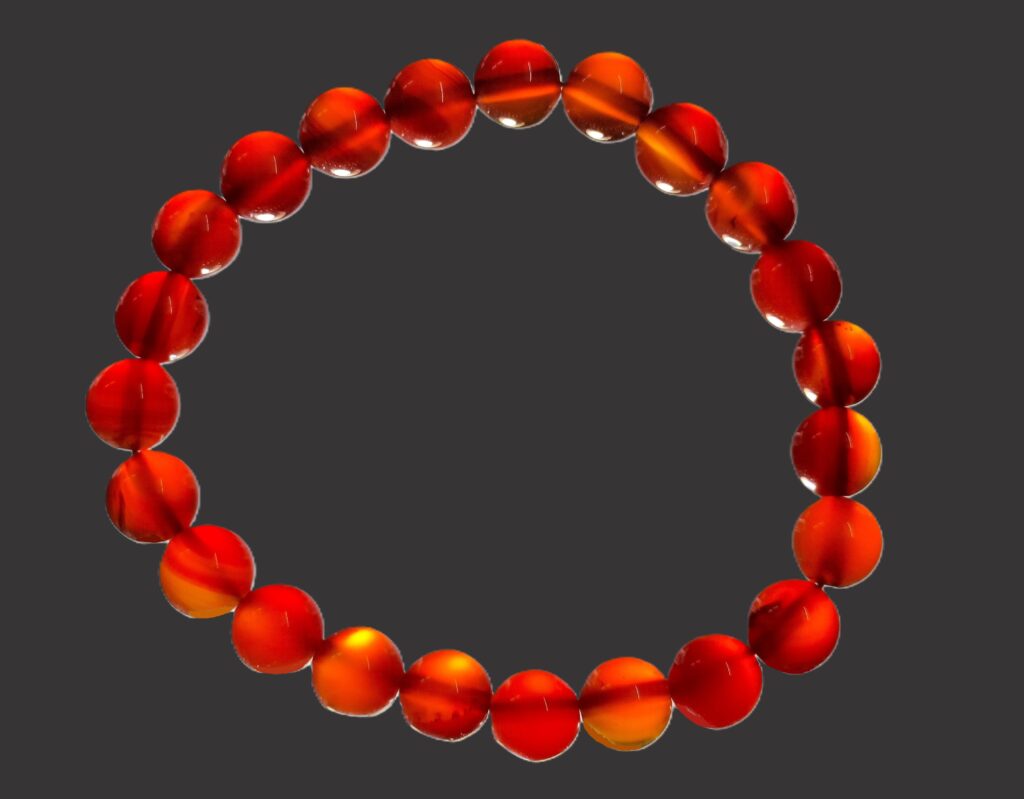
Carnelian is a brownish-red variety of chalcedony (silica mineral) that is similar to sard, but relatively softer and with lighter tones. which is generally harder and darker; the difference is not rigidly defined, and the two names are often used interchangeably. The color varies from pale orange to an intense orange and black due to presence of iron oxide. It is found in Peru, Sri Lanka, Thailand as well as Indonesia, Brazil, India, Iran, Russia and Germany. Red carnelian has been used to make beads and decorative art since ancient times. Indian carnelian beads with acid etched white design are recorded from 2600–1700 BC. Red carnelian is the stone of action and passion and is believed to promote motivation, creativity, courage and physical energy. It is also known to provide emotional warmth and support. It enhances concentration, boldness, initiative, precision, analytical thinking.
Yellow calcite cabochons
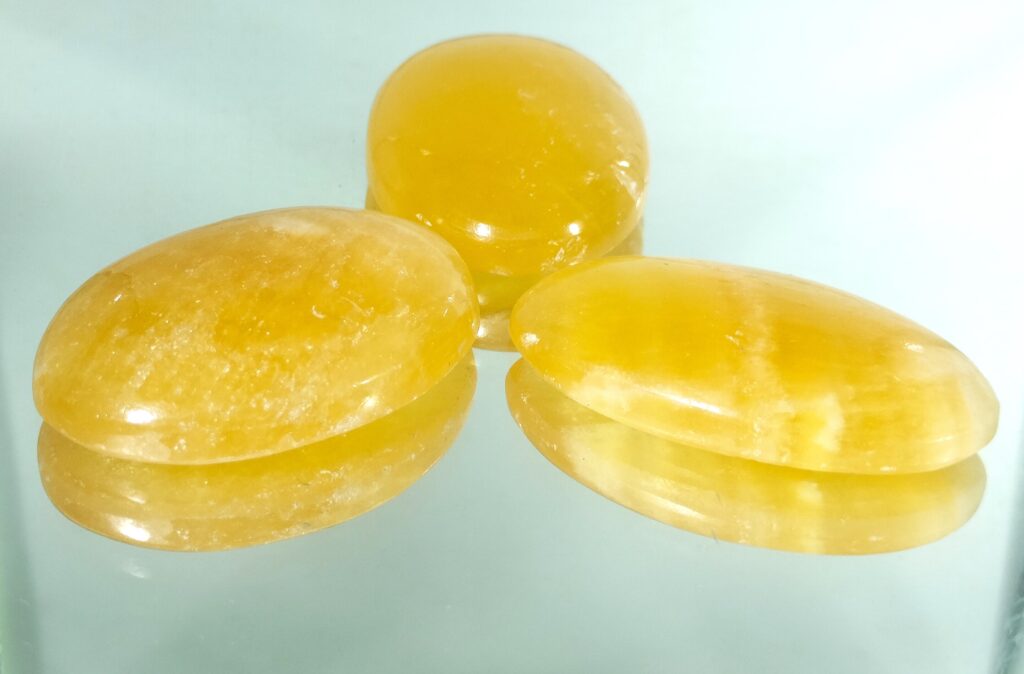
Yellow calcite is a mineral composed of calcium carbonate. It is relatively very soft with a trigonal crystal system. The color of yellow calcite is typically pale to bright yellow, transparent to translucent, and has a vitreous to pearly luster. Its most distinctive features are the yellow color, caused by impurities like iron oxide, and the banded pattern, which can range from translucent to opaque. It shows perfect cleavages in three directions, forming rhombohedra. Some specimens may display fluorescence under UV light. It is believed to encourage encourage self-confidence, optimism, and courage. It calms the mind, alleviate stress and anxiety, and promotes mental clarity and focus. It is associated with supporting the digestive system, immune system, and bones. It is also known to be associated with the Solar Plexus Chakra, and enhances personal power and self-worth.
Calcite raw stone
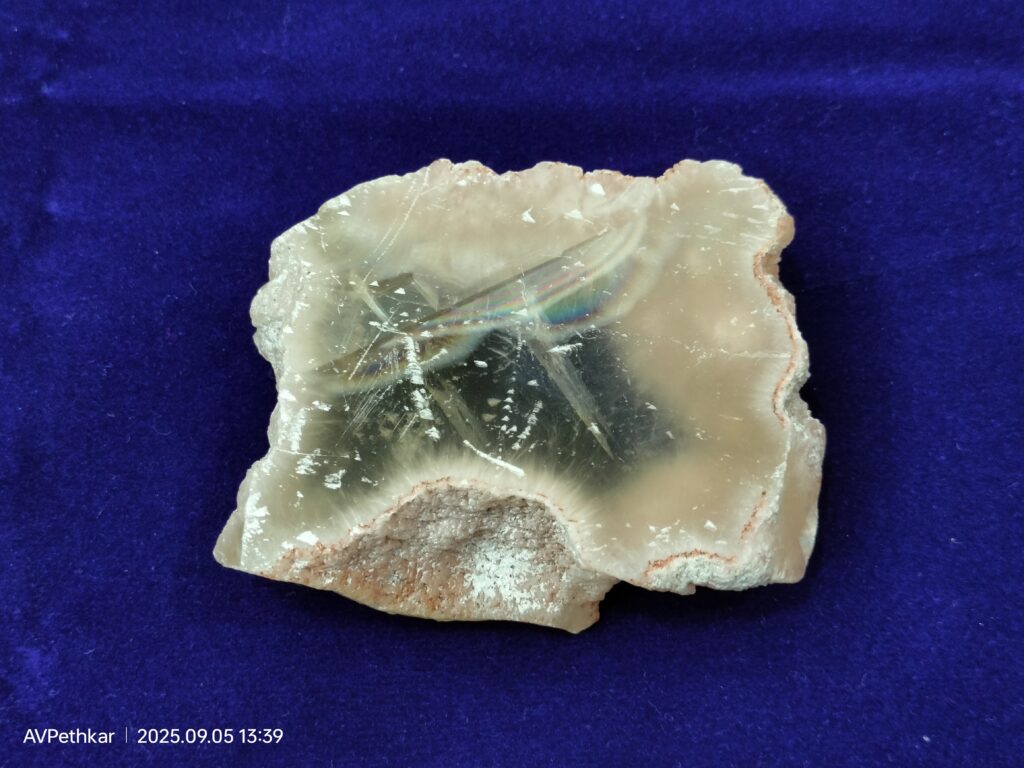
Calcite is a form of calcium carbonate that occurs commonly in limestone and is low on hardness scale. Crystals are rhombohedral or hexagonal with vitreous luster. Globular, botryoidal, stalactitic, twining and other forms are also known. Cleavage is usually in three directions parallel to the rhombohedron form. Calcite is either colorless or white, gray, red, orange, yellow, green, blue, violet, brown, or even black depending on presence of impurities. It is transparent to opaque and may display phosphorescence or fluorescence due to presence of manganese and organic molecules. It exhibits retrograde solubility, i.e. low solubility at higher temperatures. Single calcite crystals display strong birefringence (double refraction) that make objects viewed through calcite to appear doubled.
Due to unique optical properties such as birefringence, calcite is used in optical equipment for navigation. Calcite is used as a scaffold in bone tissue engineering. It prevents release of phosphorus from sediments into the water, thus inhibiting cyanobacteria overgrowth. Trilobites, animals that lived 25 billion years ago had unique compound eyes with clear calcite lenses. The stone is used for making carvings and decorative objects. It is used in jewelry due to its range of different colors and optical properties. Calcite is believed to promote emotional healing and mental clarity. White (colorless) calcite is a common calcium carbonate mineral that occurs in the form of layered cubic crystals that are pearly/chalky white, as well as pale white and even light grey. Iceland Spar is a clear transparent variety of calcite. White Calcite is believed to unlock inner vision and bring clarity in vision. Yellow calcite is believed to encourage encourage self-confidence, optimism, and courage. Blue calcite is associated with communication and relaxation, and orange calcite with creativity and positivity. Green calcite is believed to support the immune system and promote physical healing. Calcite is also believed to amplify energy and strengthen intentions.
Calcite cluster on matrix
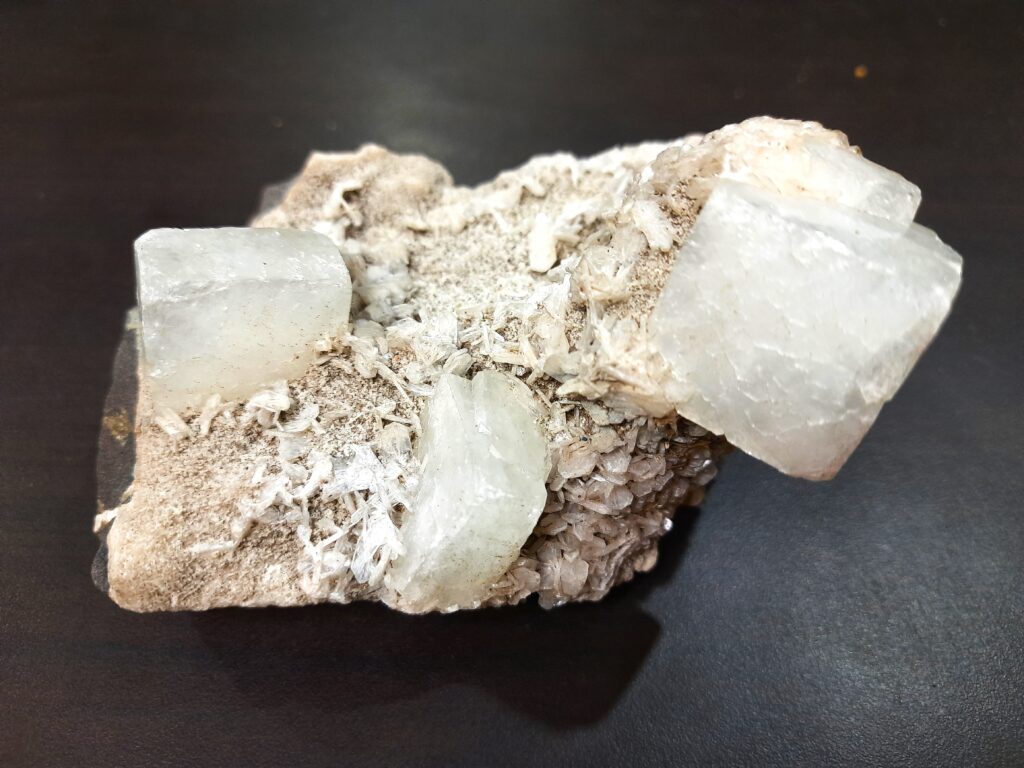
Calcite is a form of calcium carbonate that occurs commonly in limestone and is low on hardness scale. Crystals are rhombohedral or hexagonal with vitreous luster. Globular, botryoidal, stalactitic, twining and other forms are also known. Cleavage is usually in three directions parallel to the rhombohedron form. Calcite is either colorless or white, gray, red, orange, yellow, green, blue, violet, brown, or even black depending on presence of impurities. It is transparent to opaque and may display phosphorescence or fluorescence due to presence of manganese and organic molecules. It exhibits retrograde solubility, i.e. low solubility at higher temperatures. Single calcite crystals display strong birefringence (double refraction) that make objects viewed through calcite to appear doubled.
Due to unique optical properties such as birefringence, calcite is used in optical equipment for navigation. Calcite is used as a scaffold in bone tissue engineering. It prevents release of phosphorus from sediments into the water, thus inhibiting cyanobacteria overgrowth. Trilobites, animals that lived 25 billion years ago had unique compound eyes with clear calcite lenses. The stone is used for making carvings and decorative objects. It is used in jewelry due to its range of different colors and optical properties. Calcite is believed to promote emotional healing and mental clarity. White (colorless) calcite is a common calcium carbonate mineral that occurs in the form of layered cubic crystals that are pearly/chalky white, as well as pale white and even light grey. Iceland Spar is a clear transparent variety of calcite. White Calcite is believed to unlock inner vision and bring clarity in vision. Yellow calcite is believed to encourage encourage self-confidence, optimism, and courage. Blue calcite is associated with communication and relaxation, and orange calcite with creativity and positivity. Green calcite is believed to support the immune system and promote physical healing. Calcite is also believed to amplify energy and strengthen intentions.
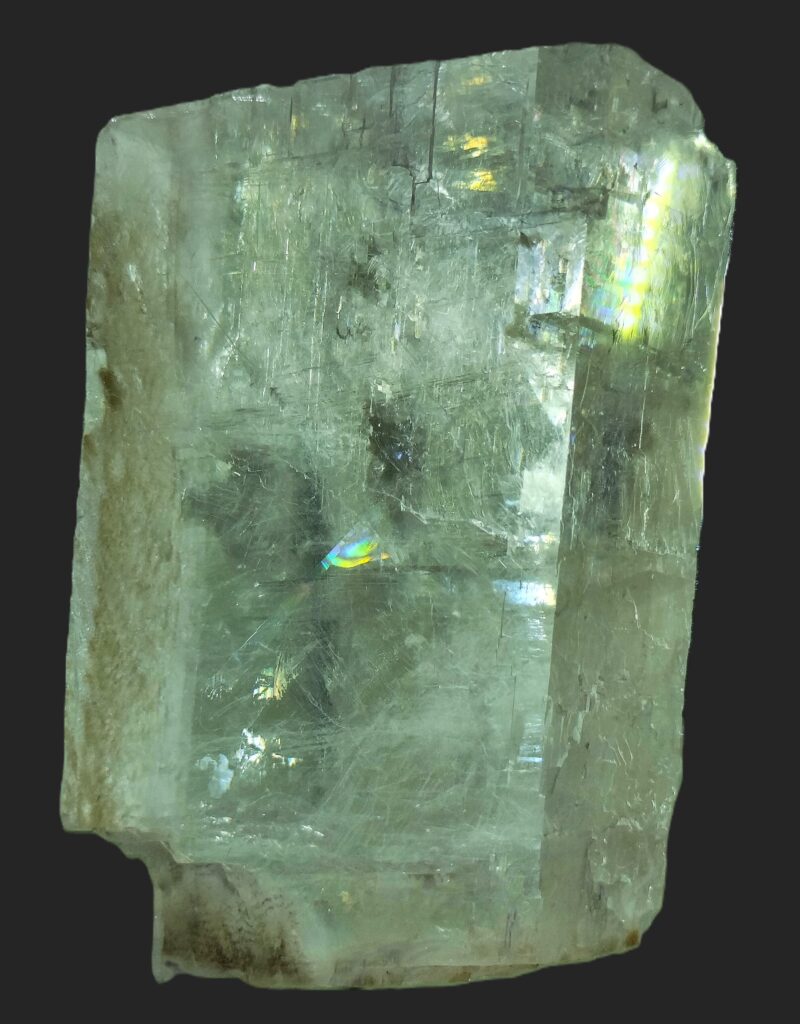
Calcite raw stone
Calcite tower pendant
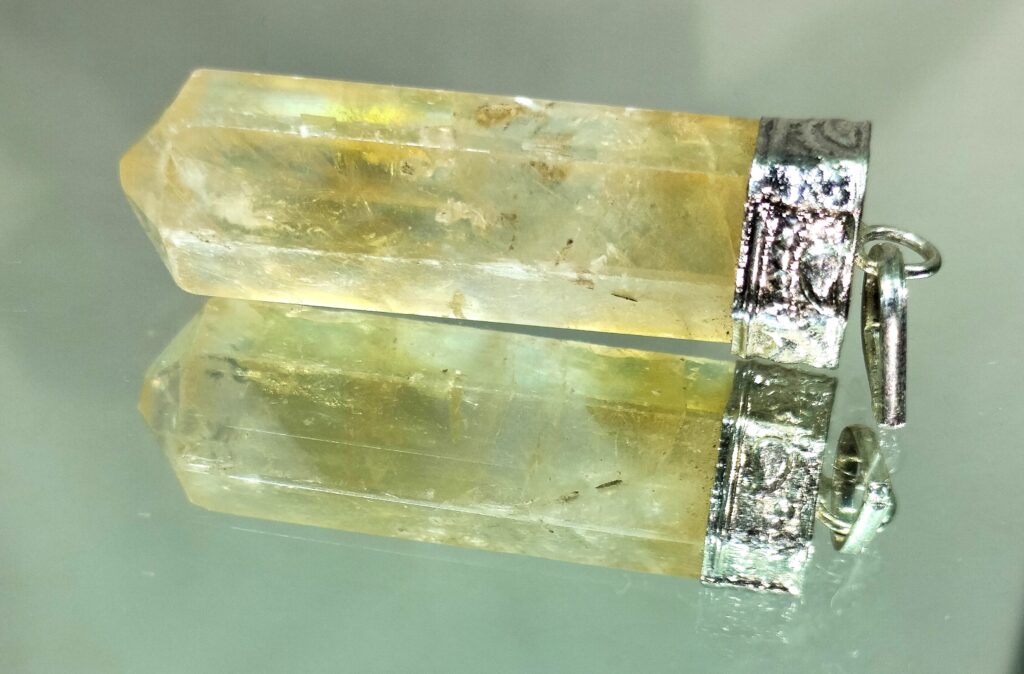
Calcite is a form of calcium carbonate that occurs commonly in limestone and is low on hardness scale. Crystals are rhombohedral or hexagonal with vitreous luster. Globular, botryoidal, stalactitic, twining and other forms are also known. Cleavage is usually in three directions parallel to the rhombohedron form. Calcite is either colorless or white, gray, red, orange, yellow, green, blue, violet, brown, or even black depending on presence of impurities. It is transparent to opaque and may display phosphorescence or fluorescence due to presence of manganese and organic molecules. It exhibits retrograde solubility, i.e. low solubility at higher temperatures. Single calcite crystals display strong birefringence (double refraction) that make objects viewed through calcite to appear doubled.
Due to unique optical properties such as birefringence, calcite is used in optical equipment for navigation. Calcite is used as a scaffold in bone tissue engineering. It prevents release of phosphorus from sediments into the water, thus inhibiting cyanobacteria overgrowth. Trilobites, animals that lived 25 billion years ago had unique compound eyes with clear calcite lenses. The stone is used for making carvings and decorative objects. It is used in jewelry due to its range of different colors and optical properties. Calcite is believed to promote emotional healing and mental clarity. White (colorless) calcite is a common calcium carbonate mineral that occurs in the form of layered cubic crystals that are pearly/chalky white, as well as pale white and even light grey. Iceland Spar is a clear transparent variety of calcite. White Calcite is believed to unlock inner vision and bring clarity in vision. Yellow calcite is believed to encourage encourage self-confidence, optimism, and courage. Blue calcite is associated with communication and relaxation, and orange calcite with creativity and positivity. Green calcite is believed to support the immune system and promote physical healing. Calcite is also believed to amplify energy and strengthen intentions.
Calcite raw stones

Calcite is a form of calcium carbonate that occurs commonly in limestone and is low on hardness scale. Crystals are rhombohedral or hexagonal with vitreous luster. Globular, botryoidal, stalactitic, twining and other forms are also known. Cleavage is usually in three directions parallel to the rhombohedron form. Calcite is either colorless or white, gray, red, orange, yellow, green, blue, violet, brown, or even black depending on presence of impurities. It is transparent to opaque and may display phosphorescence or fluorescence due to presence of manganese and organic molecules. It exhibits retrograde solubility, i.e. low solubility at higher temperatures. Single calcite crystals display strong birefringence (double refraction) that make objects viewed through calcite to appear doubled.
Due to unique optical properties such as birefringence, calcite is used in optical equipment for navigation. Calcite is used as a scaffold in bone tissue engineering. It prevents release of phosphorus from sediments into the water, thus inhibiting cyanobacteria overgrowth. Trilobites, animals that lived 25 billion years ago had unique compound eyes with clear calcite lenses. The stone is used for making carvings and decorative objects. It is used in jewelry due to its range of different colors and optical properties. Calcite is believed to promote emotional healing and mental clarity. White (colorless) calcite is a common calcium carbonate mineral that occurs in the form of layered cubic crystals that are pearly/chalky white, as well as pale white and even light grey. Iceland Spar is a clear transparent variety of calcite. White Calcite is believed to unlock inner vision and bring clarity in vision. Yellow calcite is believed to encourage encourage self-confidence, optimism, and courage. Blue calcite is associated with communication and relaxation, and orange calcite with creativity and positivity. Green calcite is believed to support the immune system and promote physical healing. Calcite is also believed to amplify energy and strengthen intentions.
Calcite raw stone
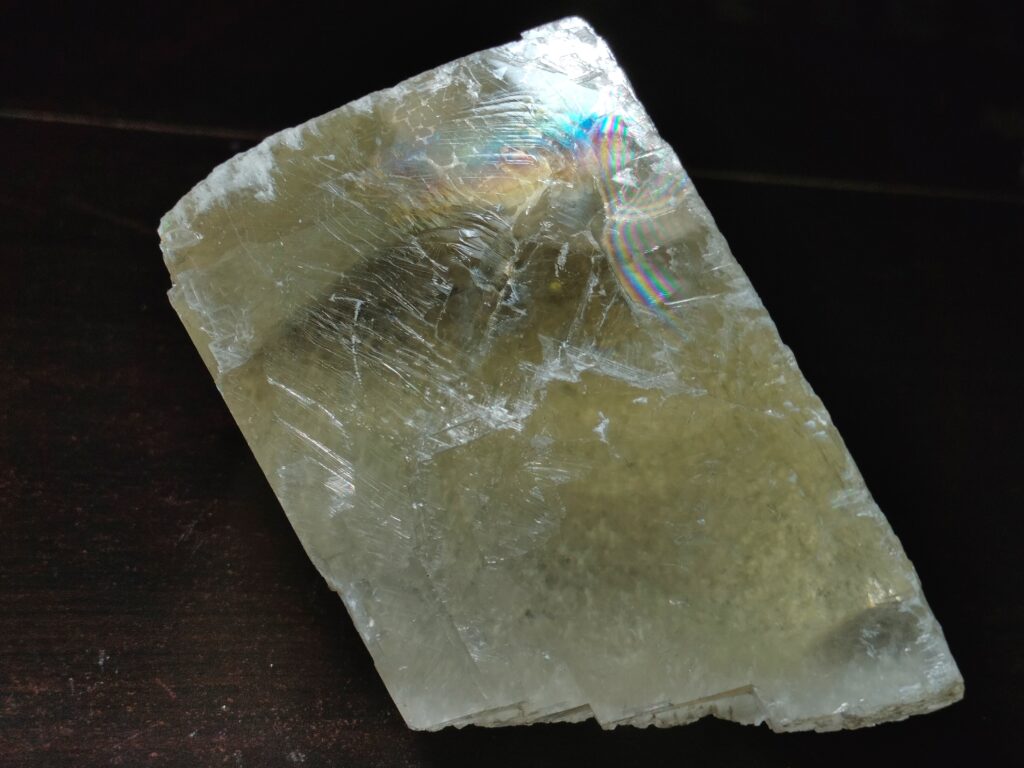
Calcite is a form of calcium carbonate that occurs commonly in limestone and is low on hardness scale. Crystals are rhombohedral or hexagonal with vitreous luster. Globular, botryoidal, stalactitic, twining and other forms are also known. Cleavage is usually in three directions parallel to the rhombohedron form. Calcite is either colorless or white, gray, red, orange, yellow, green, blue, violet, brown, or even black depending on presence of impurities. It is transparent to opaque and may display phosphorescence or fluorescence due to presence of manganese and organic molecules. It exhibits retrograde solubility, i.e. low solubility at higher temperatures. Single calcite crystals display strong birefringence (double refraction) that make objects viewed through calcite to appear doubled.
Due to unique optical properties such as birefringence, calcite is used in optical equipment for navigation. Calcite is used as a scaffold in bone tissue engineering. It prevents release of phosphorus from sediments into the water, thus inhibiting cyanobacteria overgrowth. Trilobites, animals that lived 25 billion years ago had unique compound eyes with clear calcite lenses. The stone is used for making carvings and decorative objects. It is used in jewelry due to its range of different colors and optical properties. Calcite is believed to promote emotional healing and mental clarity. White (colorless) calcite is a common calcium carbonate mineral that occurs in the form of layered cubic crystals that are pearly/chalky white, as well as pale white and even light grey. Iceland Spar is a clear transparent variety of calcite. White Calcite is believed to unlock inner vision and bring clarity in vision. Yellow calcite is believed to encourage encourage self-confidence, optimism, and courage. Blue calcite is associated with communication and relaxation, and orange calcite with creativity and positivity. Green calcite is believed to support the immune system and promote physical healing. Calcite is also believed to amplify energy and strengthen intentions.
Calcite raw stone
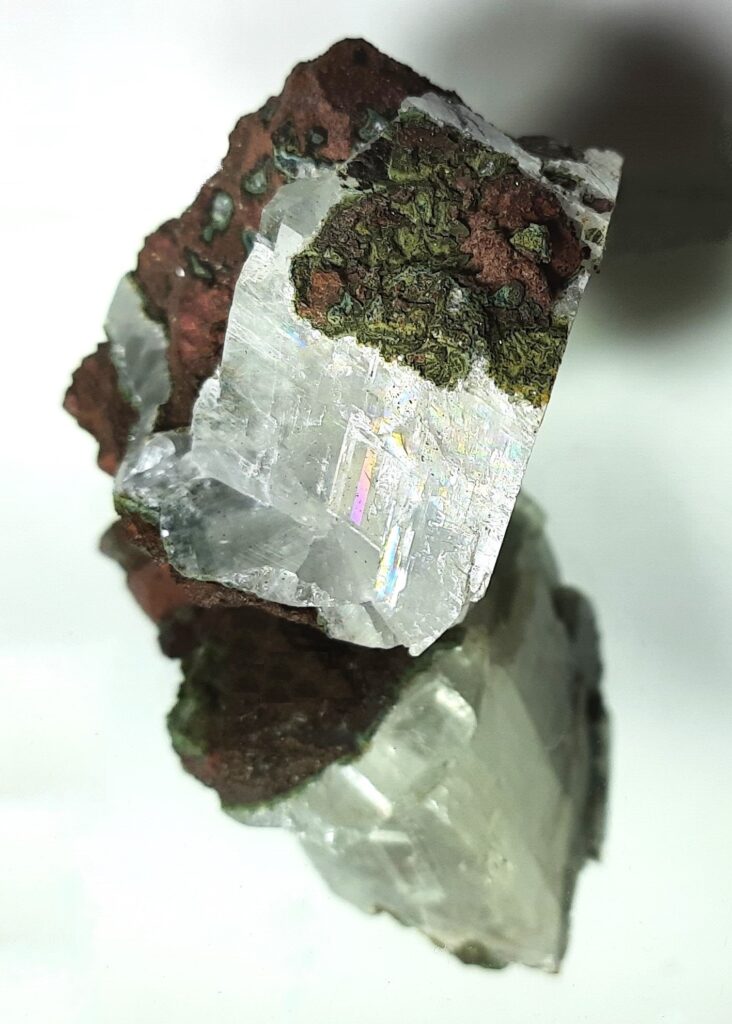
Calcite is a form of calcium carbonate that occurs commonly in limestone and is low on hardness scale. Crystals are rhombohedral or hexagonal with vitreous luster. Globular, botryoidal, stalactitic, twining and other forms are also known. Cleavage is usually in three directions parallel to the rhombohedron form. Calcite is either colorless or white, gray, red, orange, yellow, green, blue, violet, brown, or even black depending on presence of impurities. It is transparent to opaque and may display phosphorescence or fluorescence due to presence of manganese and organic molecules. It exhibits retrograde solubility, i.e. low solubility at higher temperatures. Single calcite crystals display strong birefringence (double refraction) that make objects viewed through calcite to appear doubled.
Due to unique optical properties such as birefringence, calcite is used in optical equipment for navigation. Calcite is used as a scaffold in bone tissue engineering. It prevents release of phosphorus from sediments into the water, thus inhibiting cyanobacteria overgrowth. Trilobites, animals that lived 25 billion years ago had unique compound eyes with clear calcite lenses. The stone is used for making carvings and decorative objects. It is used in jewelry due to its range of different colors and optical properties. Calcite is believed to promote emotional healing and mental clarity. White (colorless) calcite is a common calcium carbonate mineral that occurs in the form of layered cubic crystals that are pearly/chalky white, as well as pale white and even light grey. Iceland Spar is a clear transparent variety of calcite. White Calcite is believed to unlock inner vision and bring clarity in vision. Yellow calcite is believed to encourage encourage self-confidence, optimism, and courage. Blue calcite is associated with communication and relaxation, and orange calcite with creativity and positivity. Green calcite is believed to support the immune system and promote physical healing. Calcite is also believed to amplify energy and strengthen intentions.
Yellow calcite (banded) raw stone
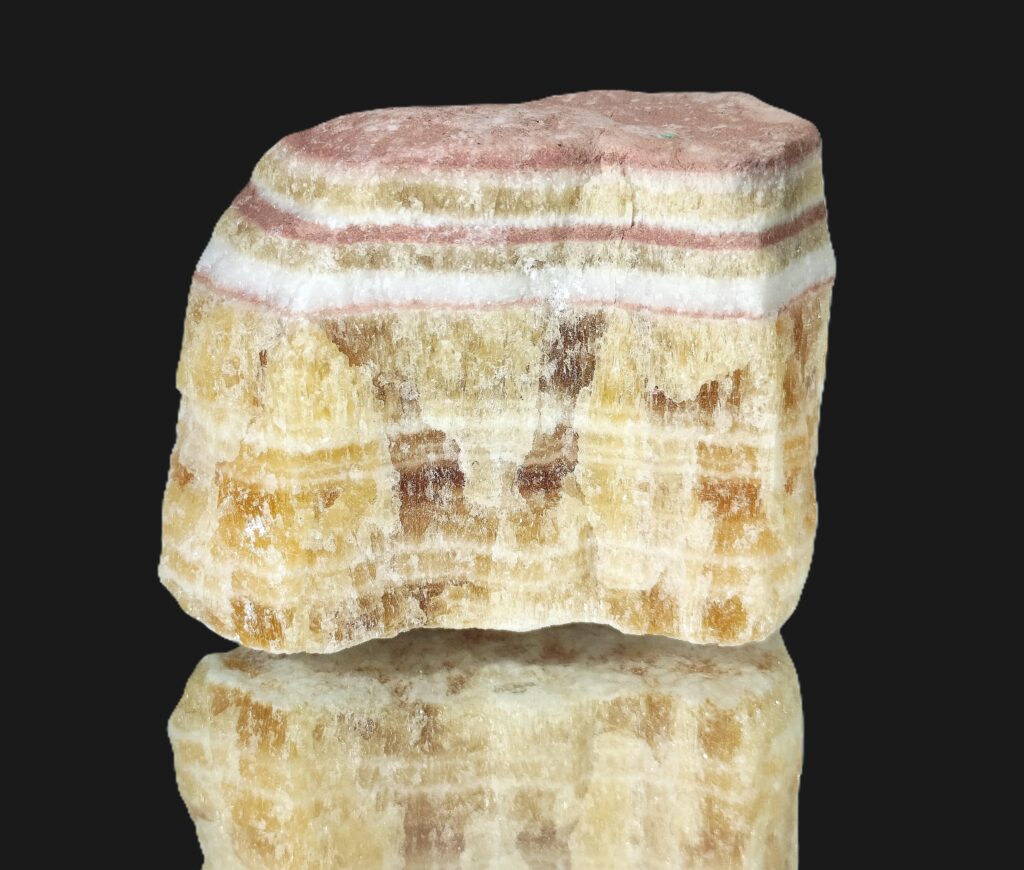
Yellow calcite is a mineral composed of calcium carbonate. It is relatively very soft with a trigonal crystal system. The color of yellow calcite is typically pale to bright yellow, transparent to translucent, and has a vitreous to pearly luster. Its most distinctive features are the yellow color, caused by impurities like iron oxide, and the banded pattern, which can range from translucent to opaque. It shows perfect cleavages in three directions, forming rhombohedra. Some specimens may display fluorescence under UV light. It is believed to encourage encourage self-confidence, optimism, and courage. It calms the mind, alleviate stress and anxiety, and promotes mental clarity and focus. It is associated with supporting the digestive system, immune system, and bones. It is also known to be associated with the Solar Plexus Chakra, and enhances personal power and self-worth.
Yellow calcite massager
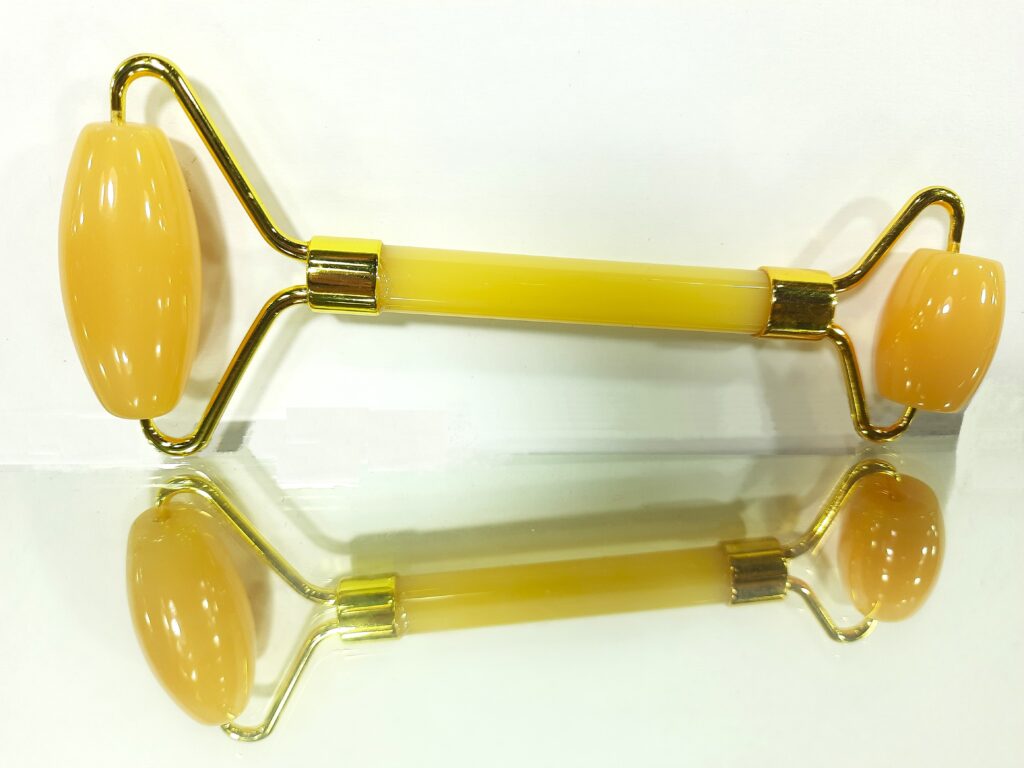
Yellow calcite is a mineral composed of calcium carbonate. It is relatively very soft with a trigonal crystal system. The color of yellow calcite is typically pale to bright yellow, transparent to translucent, and has a vitreous to pearly luster. Its most distinctive features are the yellow color, caused by impurities like iron oxide, and the banded pattern, which can range from translucent to opaque. It shows perfect cleavages in three directions, forming rhombohedra. Some specimens may display fluorescence under UV light. It is believed to encourage encourage self-confidence, optimism, and courage. It calms the mind, alleviate stress and anxiety, and promotes mental clarity and focus. It is associated with supporting the digestive system, immune system, and bones. It is also known to be associated with the Solar Plexus Chakra, and enhances personal power and self-worth.
Bronzite bracelet
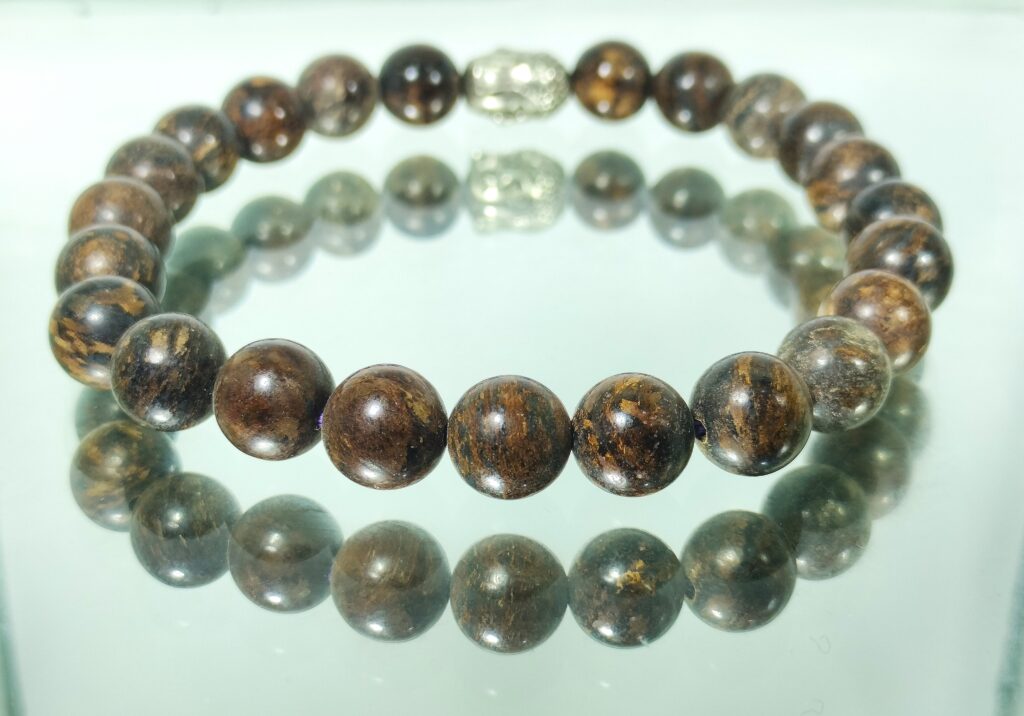
Bronzite is an iron-rich mineral and member of the pyroxene group. It has a green-brown to bronze color with sub-metallic luster that is caused by tiny iron oxide films along the cleavage planes. Bronzite is used in pigment industry, jewelry and ornaments. It is believed to promote grounding, confidence, and positivity. It is well known as “stone of courtesy” due to its ability to promote calm and harmonious environment.
Bronzite tumble stones

Bronzite is an iron-rich mineral and member of the pyroxene group. It has a green-brown to bronze color with sub-metallic luster that is caused by tiny iron oxide films along the cleavage planes. Bronzite is used in pigment industry, jewelry and ornaments. It is believed to promote grounding, confidence, and positivity. It is well known as “stone of courtesy” due to its ability to promote calm and harmonious environment.
Bronzite necklace
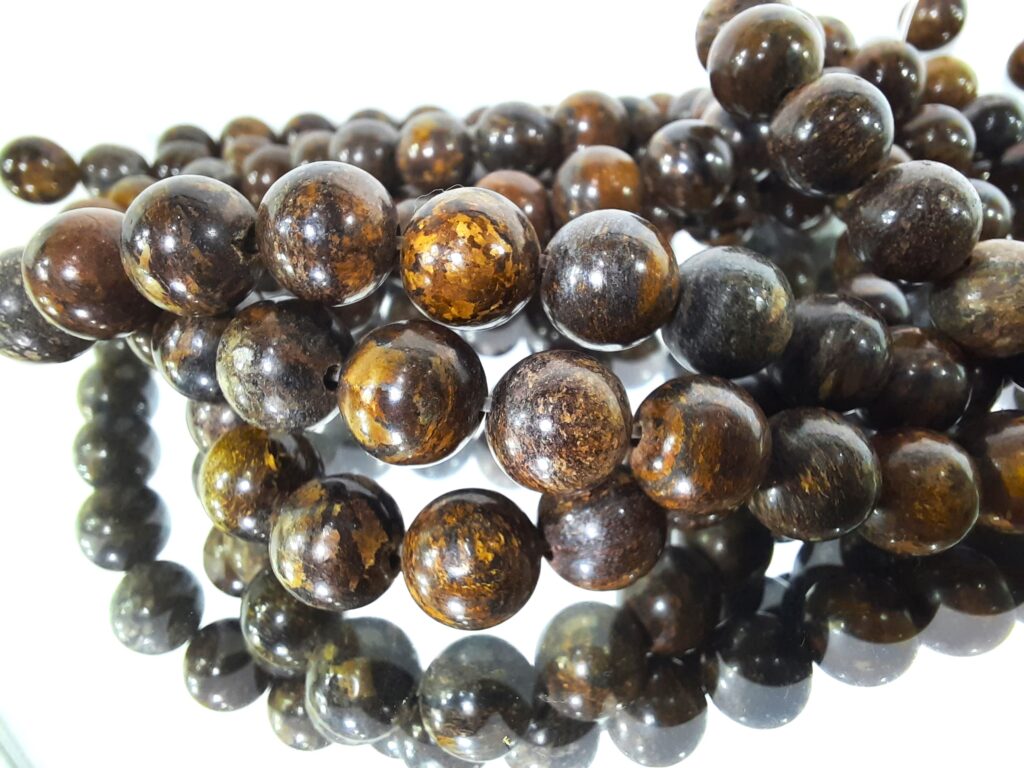
Bronzite is an iron-rich mineral and member of the pyroxene group. It has a green-brown to bronze color with sub-metallic luster that is caused by tiny iron oxide films along the cleavage planes. Bronzite is used in pigment industry, jewelry and ornaments. It is believed to promote grounding, confidence, and positivity. It is well known as “stone of courtesy” due to its ability to promote calm and harmonious environment.
Bronzite raw stone
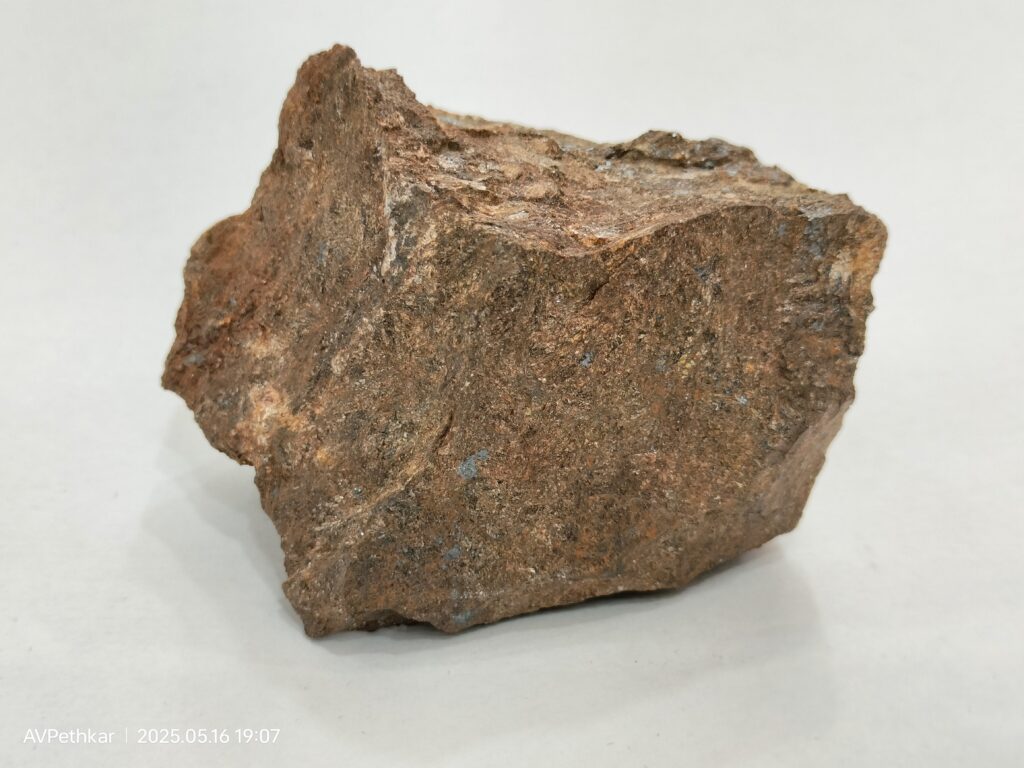
Bronzite is an iron-rich mineral and member of the pyroxene group. It has a green-brown to bronze color with sub-metallic luster that is caused by tiny iron oxide films along the cleavage planes. Bronzite is used in pigment industry, jewelry and ornaments. It is believed to promote grounding, confidence, and positivity. It is well known as “stone of courtesy” due to its ability to promote calm and harmonious environment.
Azurite bracelet
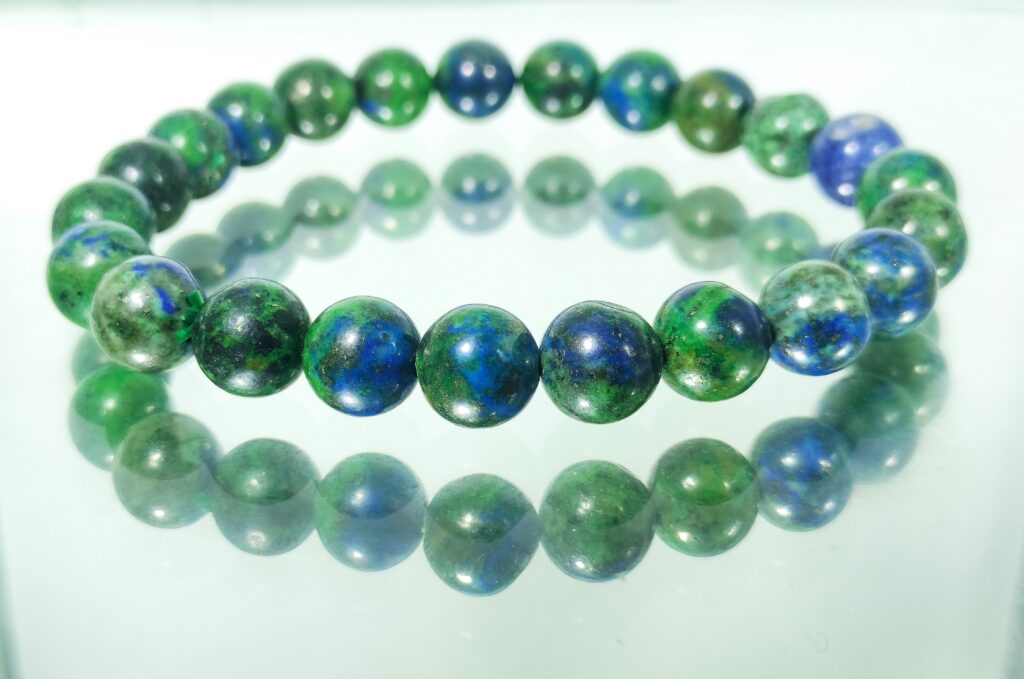
Azurite or Azure spar is a soft, deep-blue copper carbonate mineral and the blue color is due to presence of copper. Azurite crystals are monoclinic, prismatic and the specimens could be massive to nodular or drusy crystals lining a cavity. It has been used as a blue pigment since ancient times. It is also used in jewelry. It is believed to promote clear communication and balance chakras.
Azurmalachite or Azurite-Malachite is a rare mixture of azurite and malachite with a distinctive mottled green and blue coloration. It is found above copper deposits in the United States, France, and Namibia. It is believed to harmonize the mind and heart, promoting clear communication and emotional stability.
Azurite bracelet
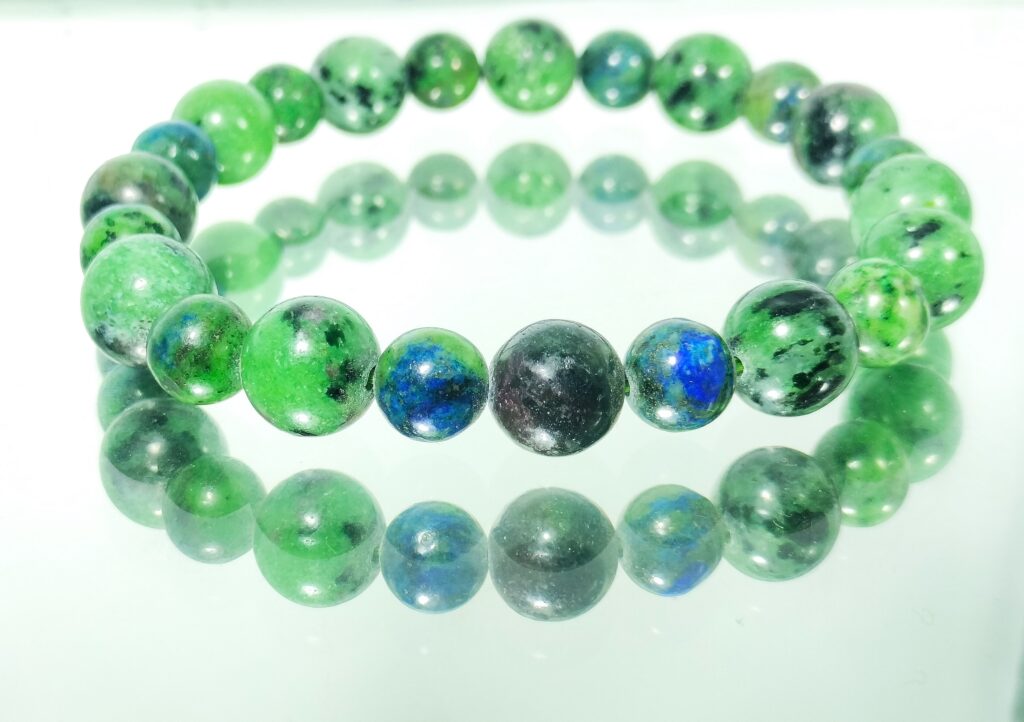
Azurite or Azure spar is a soft, deep-blue copper carbonate mineral and the blue color is due to presence of copper. Azurite crystals are monoclinic, prismatic and the specimens could be massive to nodular or drusy crystals lining a cavity. It has been used as a blue pigment since ancient times. It is also used in jewelry. It is believed to promote clear communication and balance chakras.
Azurmalachite or Azurite-Malachite is a rare mixture of azurite and malachite with a distinctive mottled green and blue coloration. It is found above copper deposits in the United States, France, and Namibia. It is believed to harmonize the mind and heart, promoting clear communication and emotional stability.
Green aventurine butterfly pendant
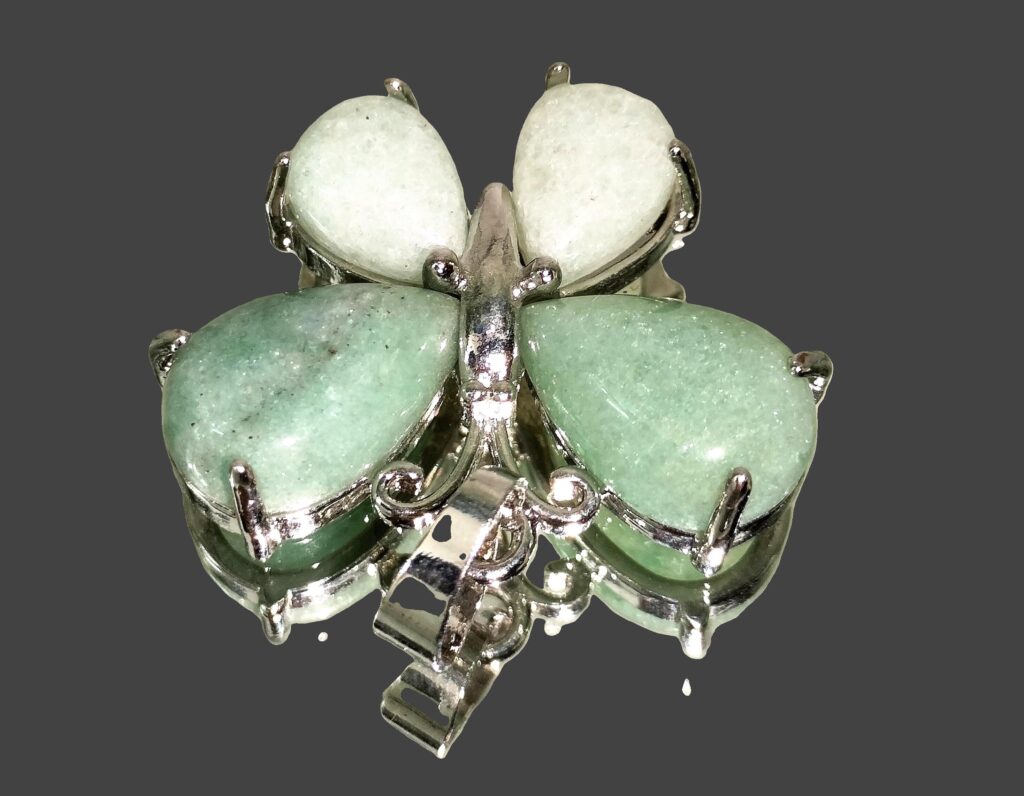
Aventurine, a type of quartzite is a translucent stone that displays characteristic metallic glitter called aventurescence (shimmering or glistening) due to mineral platelets (mica) oriented within the stone. The color varies from green to orange, brown, yellow, blue, or grey. Green and blue-green aventurine is found in India while other types are found in Chile, Spain and Russia. The stone is carved into beads and figurines, while fine quality material is carved into cabochons. Green aventurine brings about emotional healing, lets go of bad memories and promotes inner harmony. It also promotes love, compassion, and forgiveness, and thereby enhances relationships. Yellow aventurine is believed to boost confidence, creativity, and optimism. It is also known to promote prosperity and calmness.
Yellow aventurine sphere
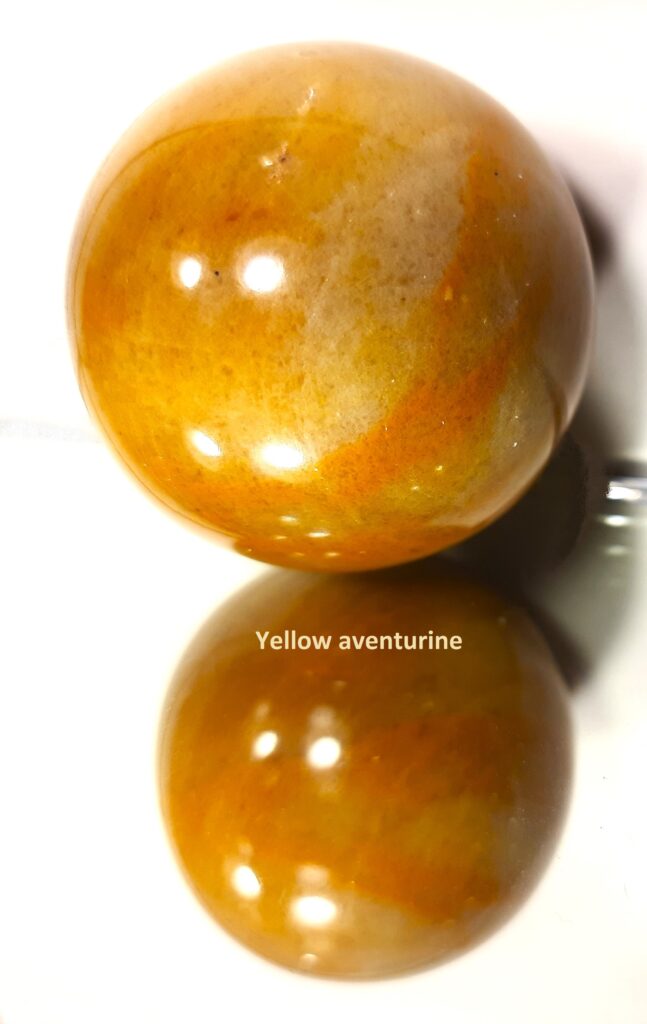
Aventurine, a type of quartzite is a translucent stone that displays characteristic metallic glitter called aventurescence (shimmering or glistening) due to mineral platelets (mica) oriented within the stone. The color varies from green to orange, brown, yellow, blue, or grey. Green and blue-green aventurine is found in India while other types are found in Chile, Spain and Russia. The stone is carved into beads and figurines, while fine quality material is carved into cabochons. Green aventurine brings about emotional healing, lets go of bad memories and promotes inner harmony. It also promotes love, compassion, and forgiveness, and thereby enhances relationships. Yellow aventurine is believed to boost confidence, creativity, and optimism. It is also known to promote prosperity and calmness.
Yellow aventurine angel
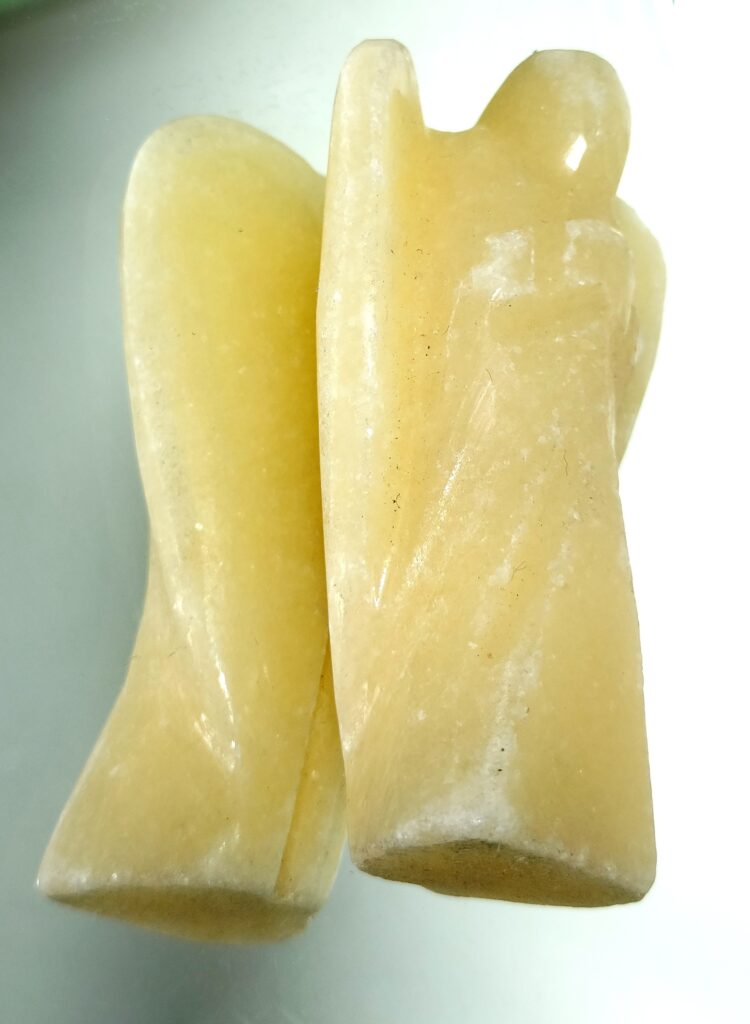
Aventurine, a type of quartzite is a translucent stone that displays characteristic metallic glitter called aventurescence (shimmering or glistening) due to mineral platelets (mica) oriented within the stone. The color varies from green to orange, brown, yellow, blue, or grey. Green and blue-green aventurine is found in India while other types are found in Chile, Spain and Russia. The stone is carved into beads and figurines, while fine quality material is carved into cabochons. Green aventurine brings about emotional healing, lets go of bad memories and promotes inner harmony. It also promotes love, compassion, and forgiveness, and thereby enhances relationships. Yellow aventurine is believed to boost confidence, creativity, and optimism. It is also known to promote prosperity and calmness.
Yellow aventurine raw stone
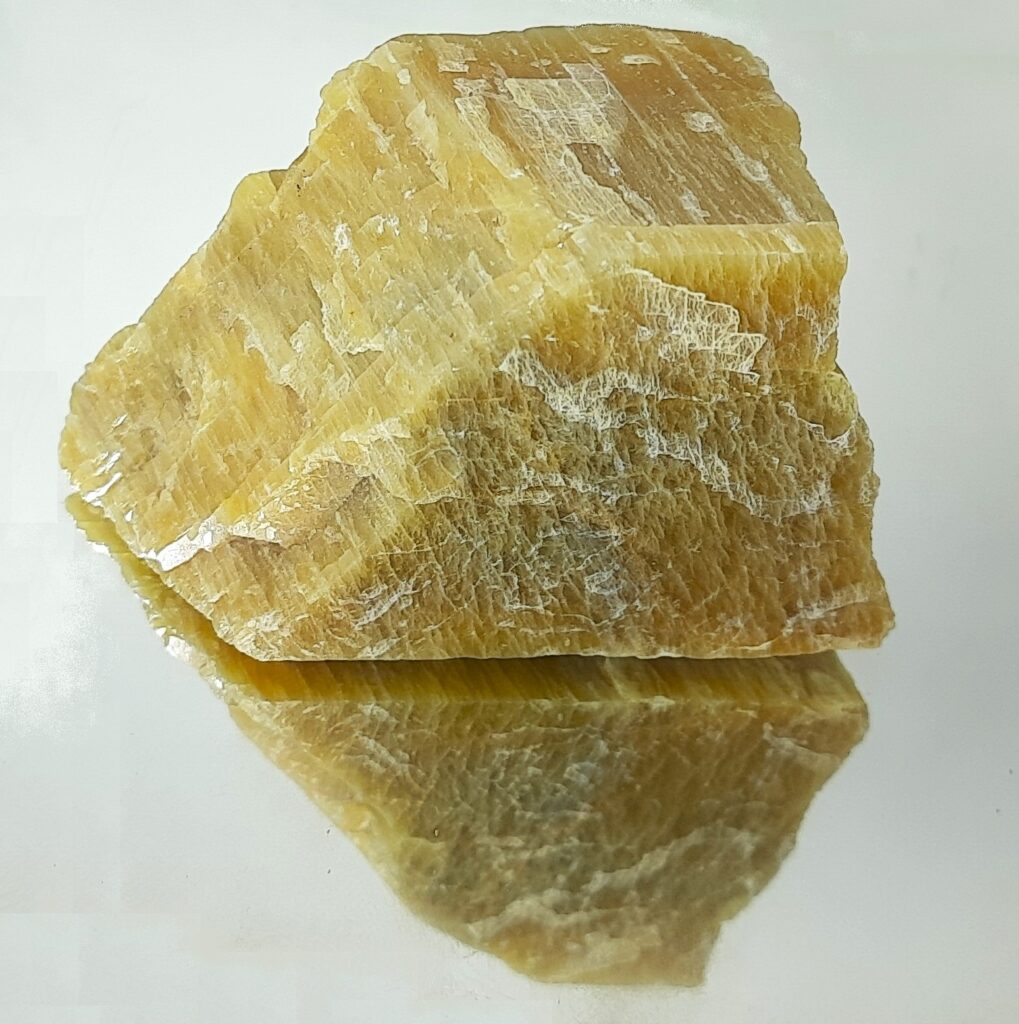
Aventurine, a type of quartzite is a translucent stone that displays characteristic metallic glitter called aventurescence (shimmering or glistening) due to mineral platelets (mica) oriented within the stone. The color varies from green to orange, brown, yellow, blue, or grey. Green and blue-green aventurine is found in India while other types are found in Chile, Spain and Russia. The stone is carved into beads and figurines, while fine quality material is carved into cabochons. Green aventurine brings about emotional healing, lets go of bad memories and promotes inner harmony. It also promotes love, compassion, and forgiveness, and thereby enhances relationships. Yellow aventurine is believed to boost confidence, creativity, and optimism. It is also known to promote prosperity and calmness.
Green aventurine towers
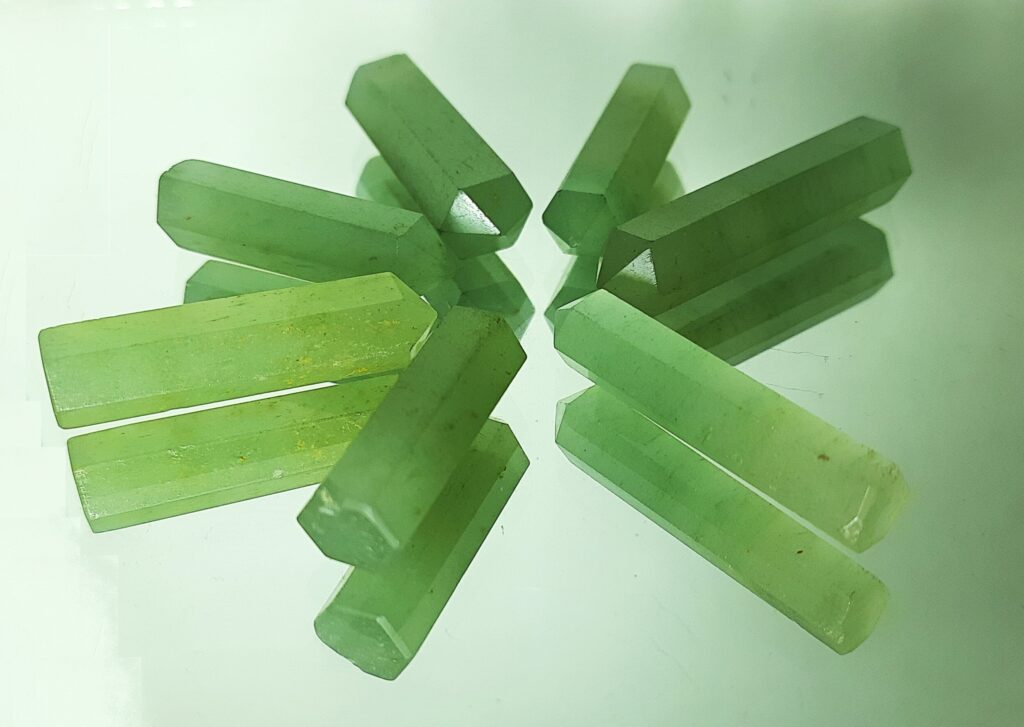
Aventurine, a type of quartzite is a translucent stone that displays characteristic metallic glitter called aventurescence (shimmering or glistening) due to mineral platelets (mica) oriented within the stone. The color varies from green to orange, brown, yellow, blue, or grey. Green and blue-green aventurine is found in India while other types are found in Chile, Spain and Russia. The stone is carved into beads and figurines, while fine quality material is carved into cabochons. Green aventurine brings about emotional healing, lets go of bad memories and promotes inner harmony. It also promotes love, compassion, and forgiveness, and thereby enhances relationships. Yellow aventurine is believed to boost confidence, creativity, and optimism. It is also known to promote prosperity and calmness.
Green aventurine cabochon
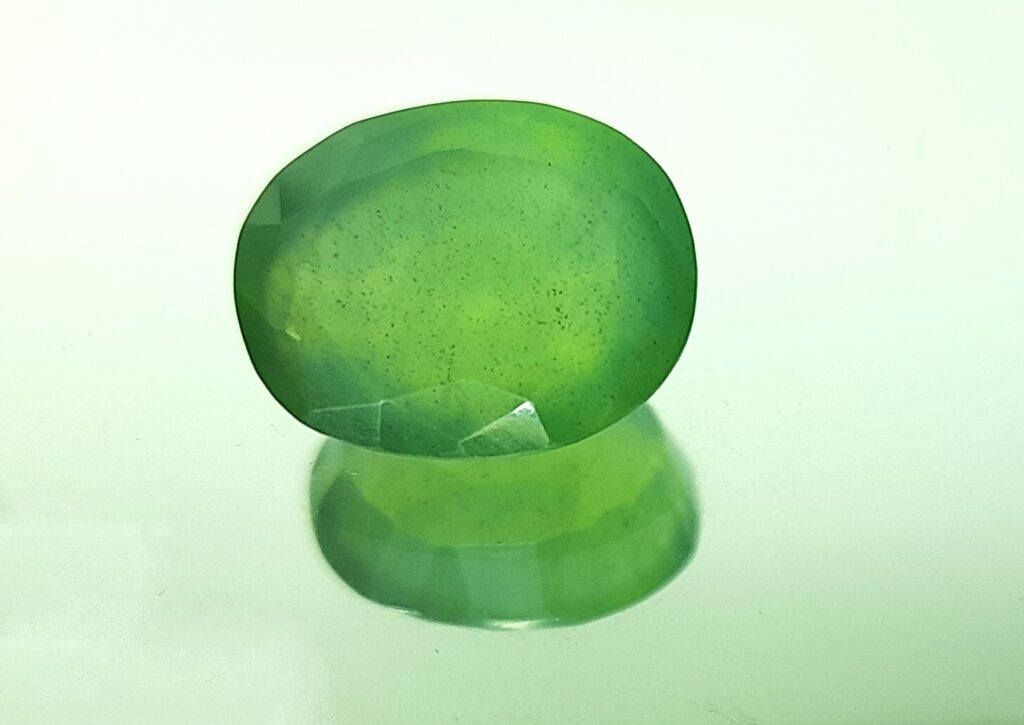
Aventurine, a type of quartzite is a translucent stone that displays characteristic metallic glitter called aventurescence (shimmering or glistening) due to mineral platelets (mica) oriented within the stone. The color varies from green to orange, brown, yellow, blue, or grey. Green and blue-green aventurine is found in India while other types are found in Chile, Spain and Russia. The stone is carved into beads and figurines, while fine quality material is carved into cabochons. Green aventurine brings about emotional healing, lets go of bad memories and promotes inner harmony. It also promotes love, compassion, and forgiveness, and thereby enhances relationships. Yellow aventurine is believed to boost confidence, creativity, and optimism. It is also known to promote prosperity and calmness.
Green aventurine heart pendants
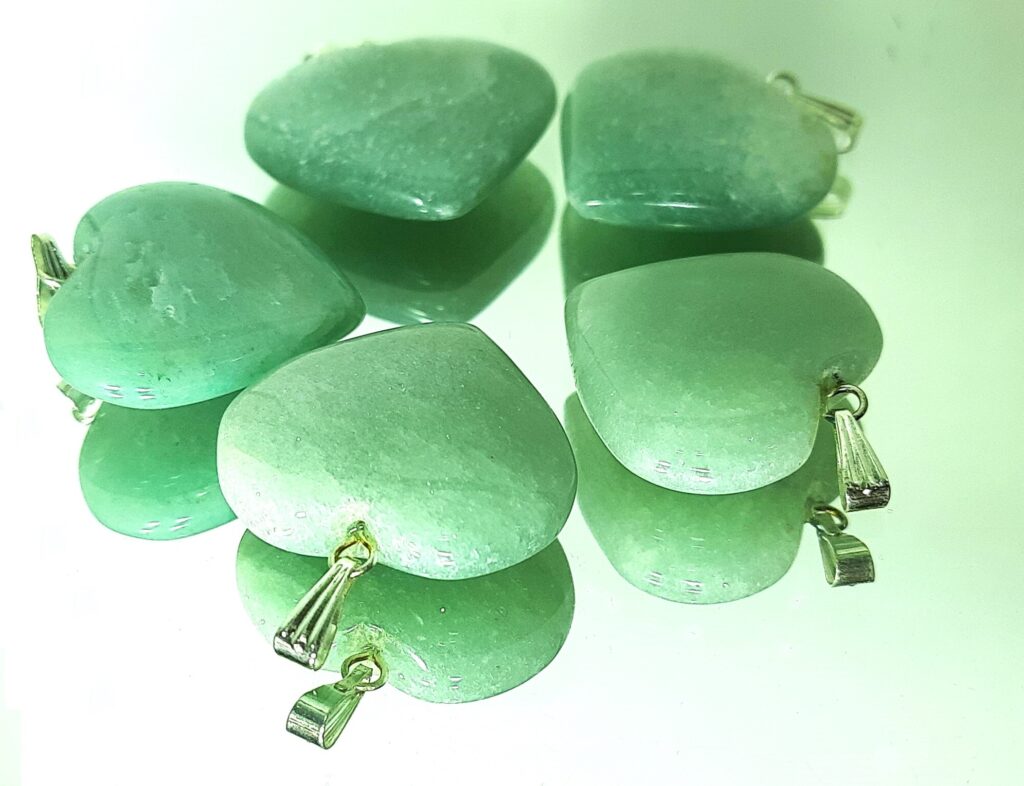
Aventurine, a type of quartzite is a translucent stone that displays characteristic metallic glitter called aventurescence (shimmering or glistening) due to mineral platelets (mica) oriented within the stone. The color varies from green to orange, brown, yellow, blue, or grey. Green and blue-green aventurine is found in India while other types are found in Chile, Spain and Russia. The stone is carved into beads and figurines, while fine quality material is carved into cabochons. Green aventurine brings about emotional healing, lets go of bad memories and promotes inner harmony. It also promotes love, compassion, and forgiveness, and thereby enhances relationships. Yellow aventurine is believed to boost confidence, creativity, and optimism. It is also known to promote prosperity and calmness.
Green aventurine tumble stone pendant
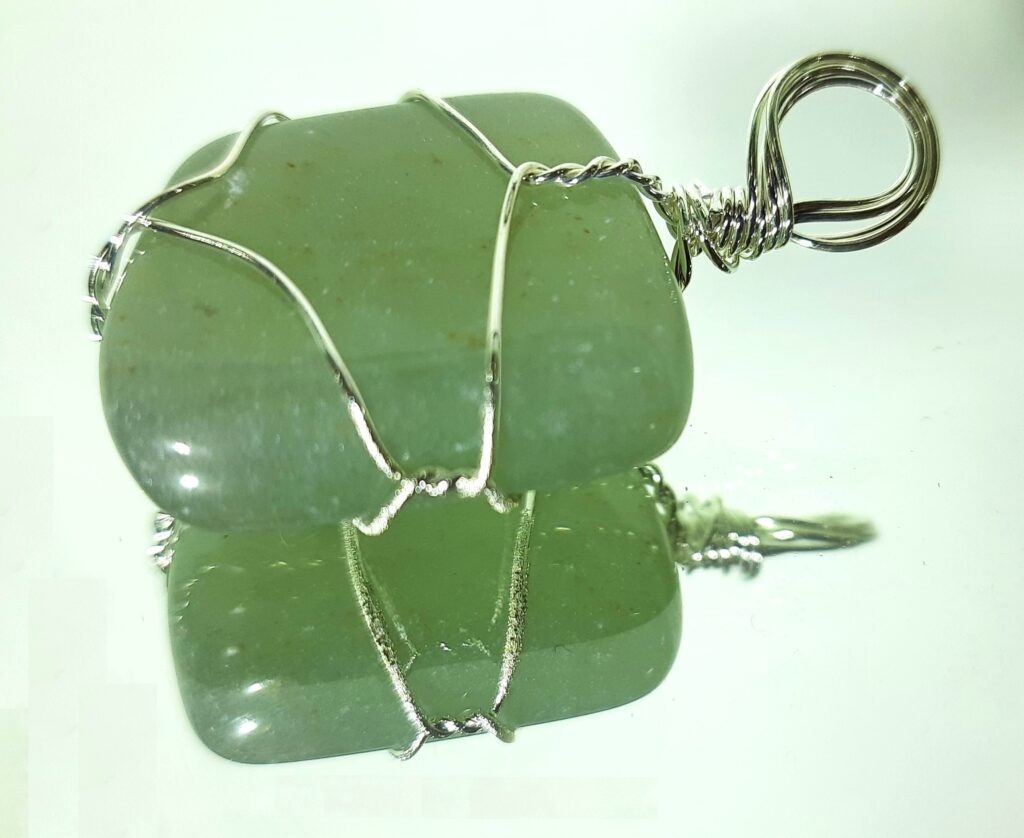
Aventurine, a type of quartzite is a translucent stone that displays characteristic metallic glitter called aventurescence (shimmering or glistening) due to mineral platelets (mica) oriented within the stone. The color varies from green to orange, brown, yellow, blue, or grey. Green and blue-green aventurine is found in India while other types are found in Chile, Spain and Russia. The stone is carved into beads and figurines, while fine quality material is carved into cabochons. Green aventurine brings about emotional healing, lets go of bad memories and promotes inner harmony. It also promotes love, compassion, and forgiveness, and thereby enhances relationships. Yellow aventurine is believed to boost confidence, creativity, and optimism. It is also known to promote prosperity and calmness.
Green aventurine tumble stone
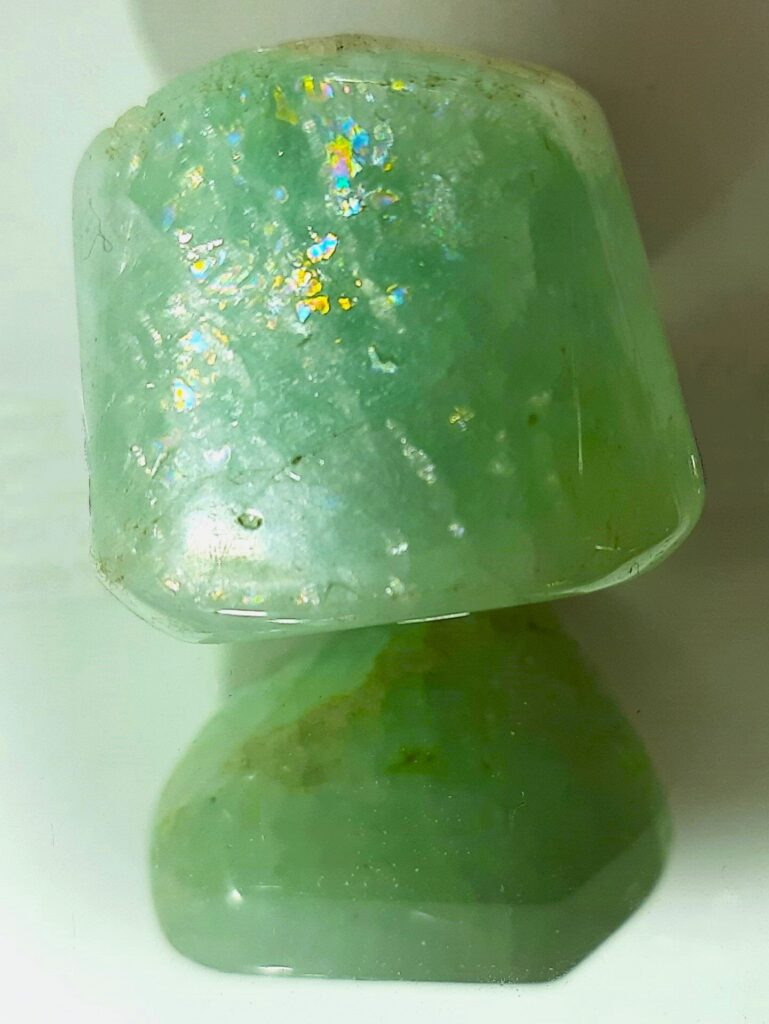
Aventurine, a type of quartzite is a translucent stone that displays characteristic metallic glitter called aventurescence (shimmering or glistening) due to mineral platelets (mica) oriented within the stone. The color varies from green to orange, brown, yellow, blue, or grey. Green and blue-green aventurine is found in India while other types are found in Chile, Spain and Russia. The stone is carved into beads and figurines, while fine quality material is carved into cabochons. Green aventurine brings about emotional healing, lets go of bad memories and promotes inner harmony. It also promotes love, compassion, and forgiveness, and thereby enhances relationships. Yellow aventurine is believed to boost confidence, creativity, and optimism. It is also known to promote prosperity and calmness.
Green aventurine raw stone
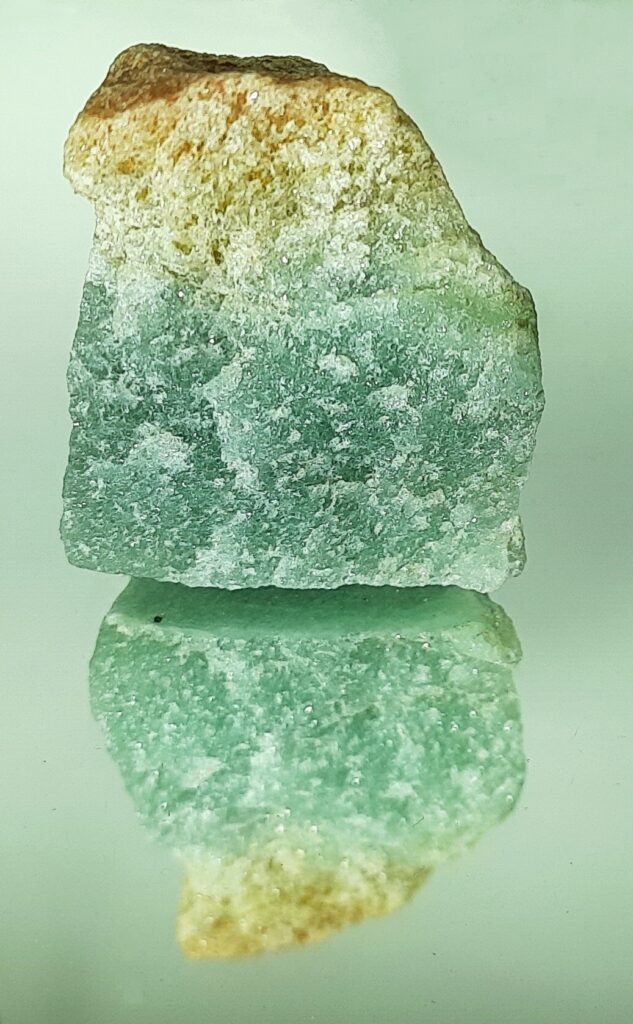
Aventurine, a type of quartzite is a translucent stone that displays characteristic metallic glitter called aventurescence (shimmering or glistening) due to mineral platelets (mica) oriented within the stone. The color varies from green to orange, brown, yellow, blue, or grey. Green and blue-green aventurine is found in India while other types are found in Chile, Spain and Russia. The stone is carved into beads and figurines, while fine quality material is carved into cabochons. Green aventurine brings about emotional healing, lets go of bad memories and promotes inner harmony. It also promotes love, compassion, and forgiveness, and thereby enhances relationships. Yellow aventurine is believed to boost confidence, creativity, and optimism. It is also known to promote prosperity and calmness.
Azurite raw stone
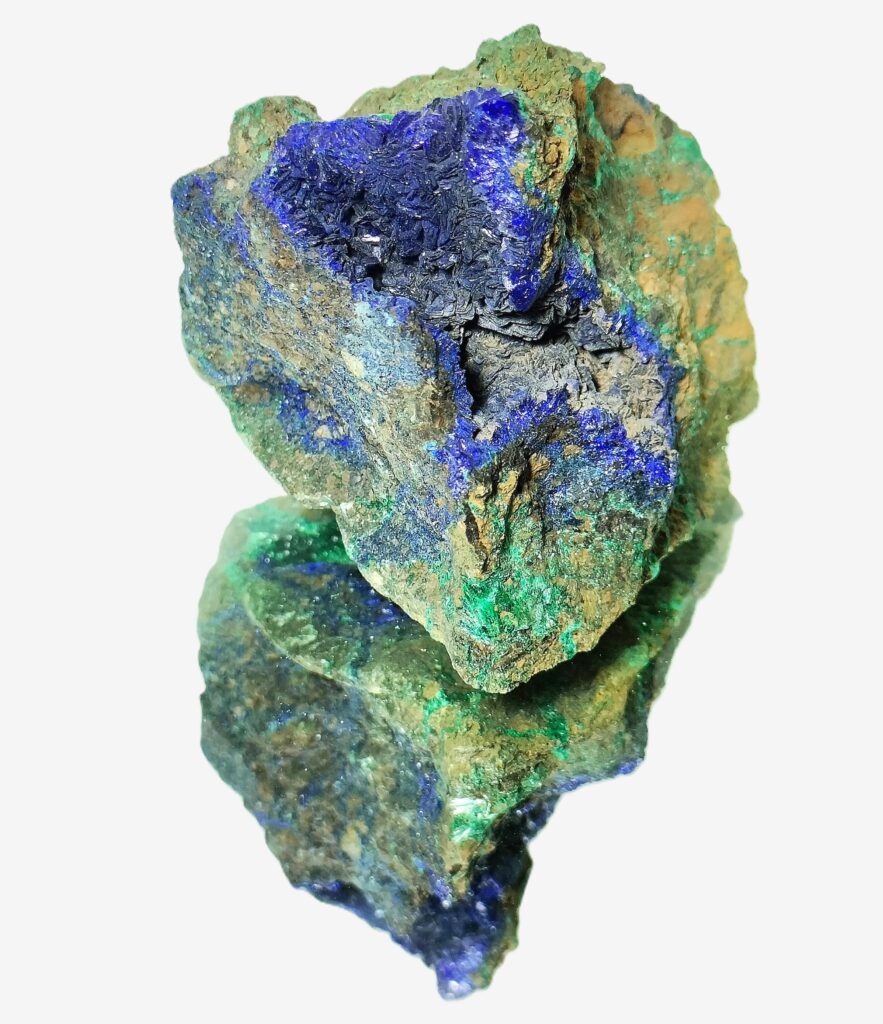
Azurite or Azure spar is a soft, deep-blue copper carbonate mineral and the blue color is due to presence of copper. Azurite crystals are monoclinic, prismatic and the specimens could be massive to nodular or drusy crystals lining a cavity. It has been used as a blue pigment since ancient times. It is also used in jewelry. It is believed to promote clear communication and balance chakras.
Green aventurine necklace
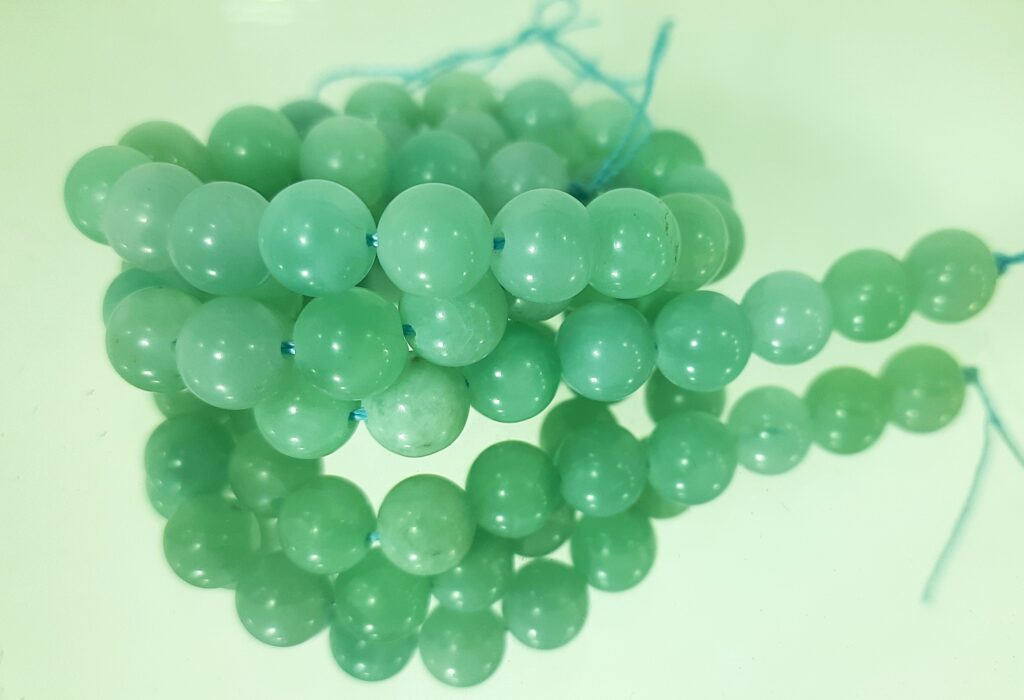
Green aventurine cabochon
Aquamarine raw crystal
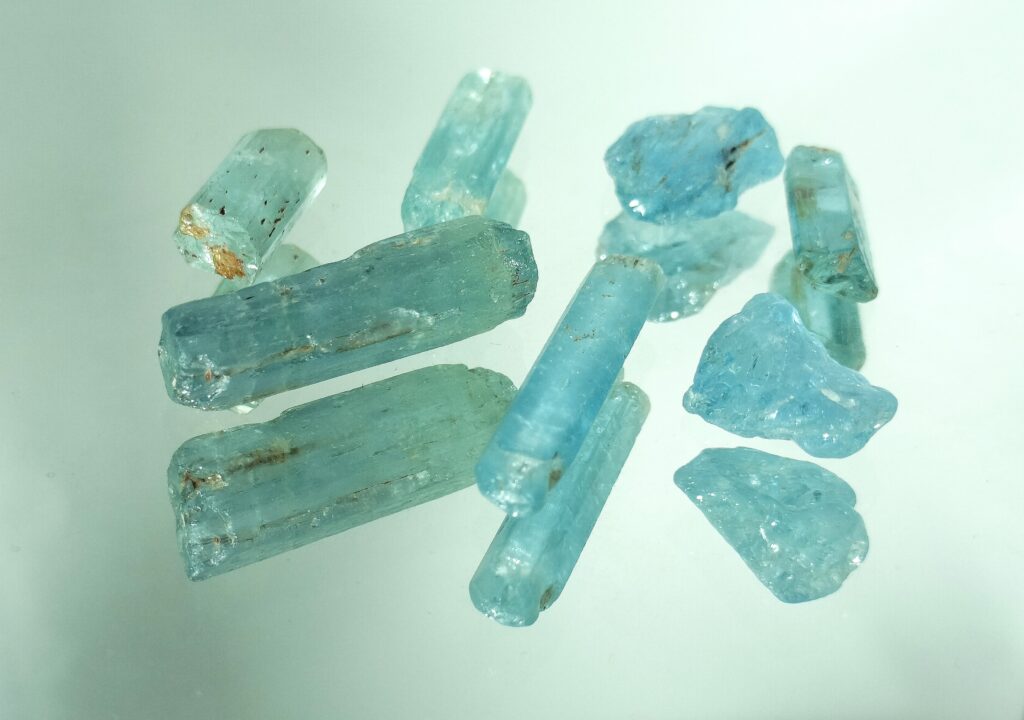
Aquamarine is a type of beryl with a pale-blue to light-green color and transparent to translucent prismatic hexagonal crystals. The color is due to presence of iron. Aquamarine can be found in Afghanistan, Pakistan, China, Kenya, Russia, USA, Brazil, Nigeria, Madagascar, Tanzania, Sri Lanka, India, and Australia. Due to its hardness of 7.5 to 8 on Mohs scale, it is suitable for use in jewelry. Aquamarine is known to promote inner peace, communication, decision-making, love and compassion. It is also associated with prosperity.
Aquamarine cabochon
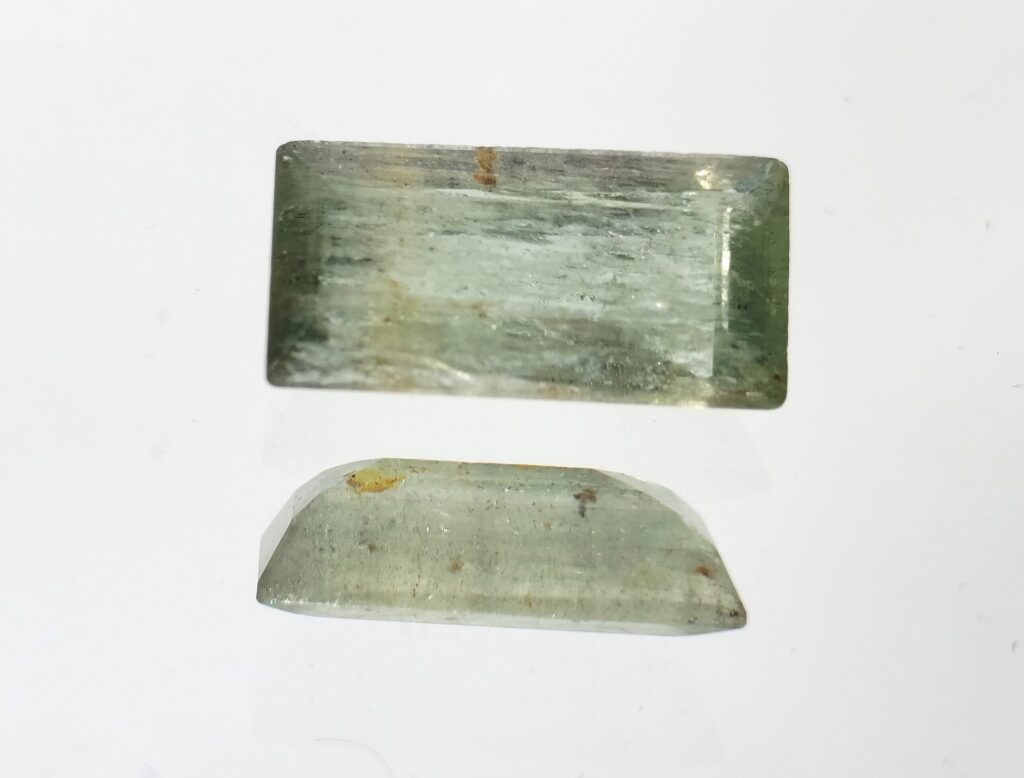
Aquamarine is a type of beryl with a pale-blue to light-green color and transparent to translucent prismatic hexagonal crystals. The color is due to presence of iron. Aquamarine can be found in Afghanistan, Pakistan, China, Kenya, Russia, USA, Brazil, Nigeria, Madagascar, Tanzania, Sri Lanka, India, and Australia. Due to its hardness of 7.5 to 8 on Mohs scale, it is suitable for use in jewelry. Aquamarine is known to promote inner peace, communication, decision-making, love and compassion. It is also associated with prosperity.
Aquamarine raw stone
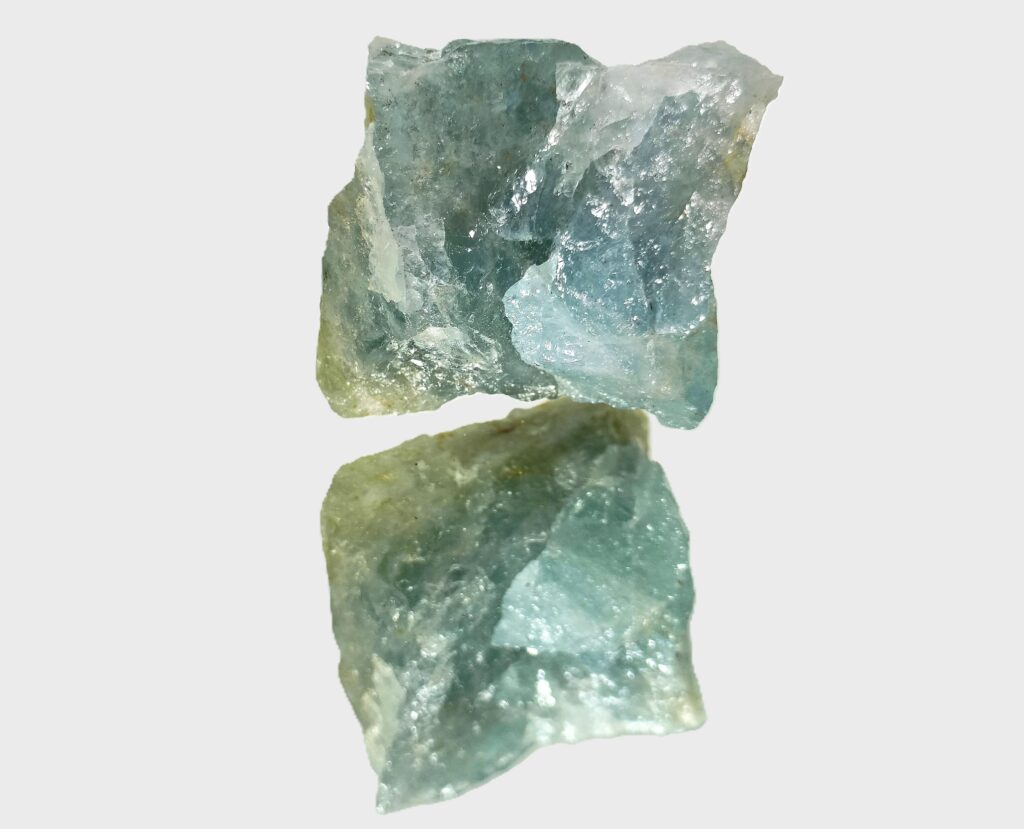
Aquamarine is a type of beryl with a pale-blue to light-green color and transparent to translucent prismatic hexagonal crystals. The color is due to presence of iron. Aquamarine can be found in Afghanistan, Pakistan, China, Kenya, Russia, USA, Brazil, Nigeria, Madagascar, Tanzania, Sri Lanka, India, and Australia. Due to its hardness of 7.5 to 8 on Mohs scale, it is suitable for use in jewelry. Aquamarine is known to promote inner peace, communication, decision-making, love and compassion. It is also associated with prosperity.
Aquamarine cabochon
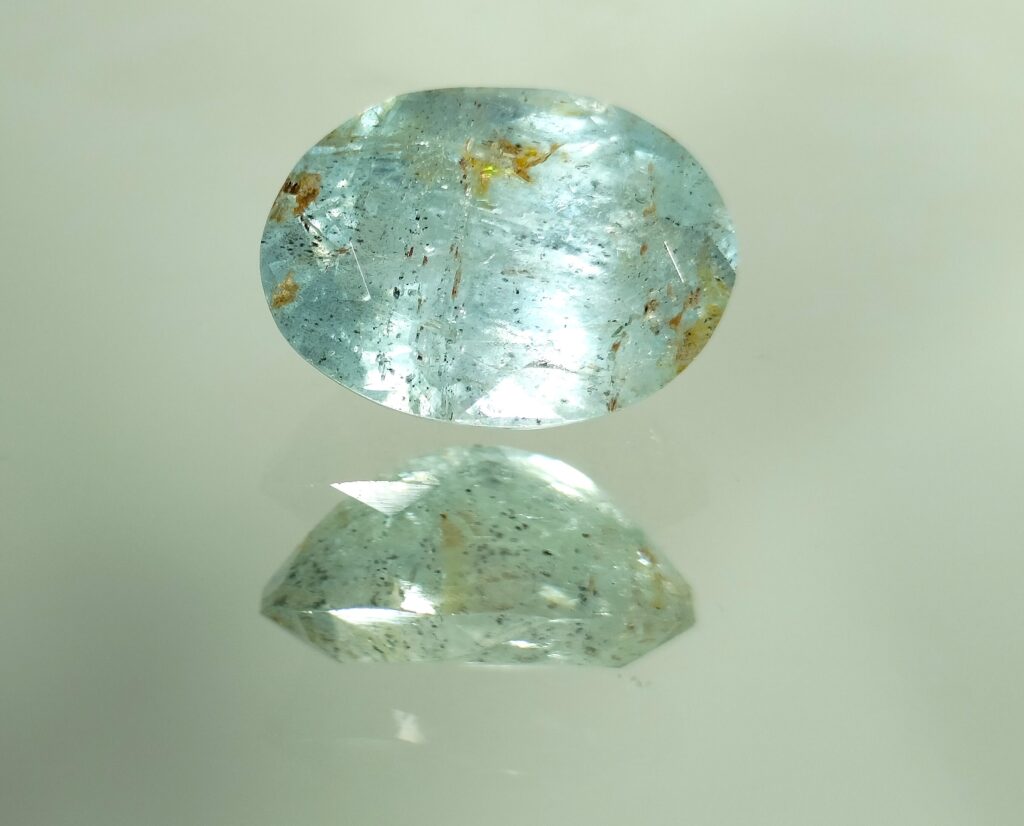
Aquamarine is a type of beryl with a pale-blue to light-green color and transparent to translucent prismatic hexagonal crystals. The color is due to presence of iron. Aquamarine can be found in Afghanistan, Pakistan, China, Kenya, Russia, USA, Brazil, Nigeria, Madagascar, Tanzania, Sri Lanka, India, and Australia. Due to its hardness of 7.5 to 8 on Mohs scale, it is suitable for use in jewelry. Aquamarine is known to promote inner peace, communication, decision-making, love and compassion. It is also associated with prosperity.
Aquamarine facetted cabochon
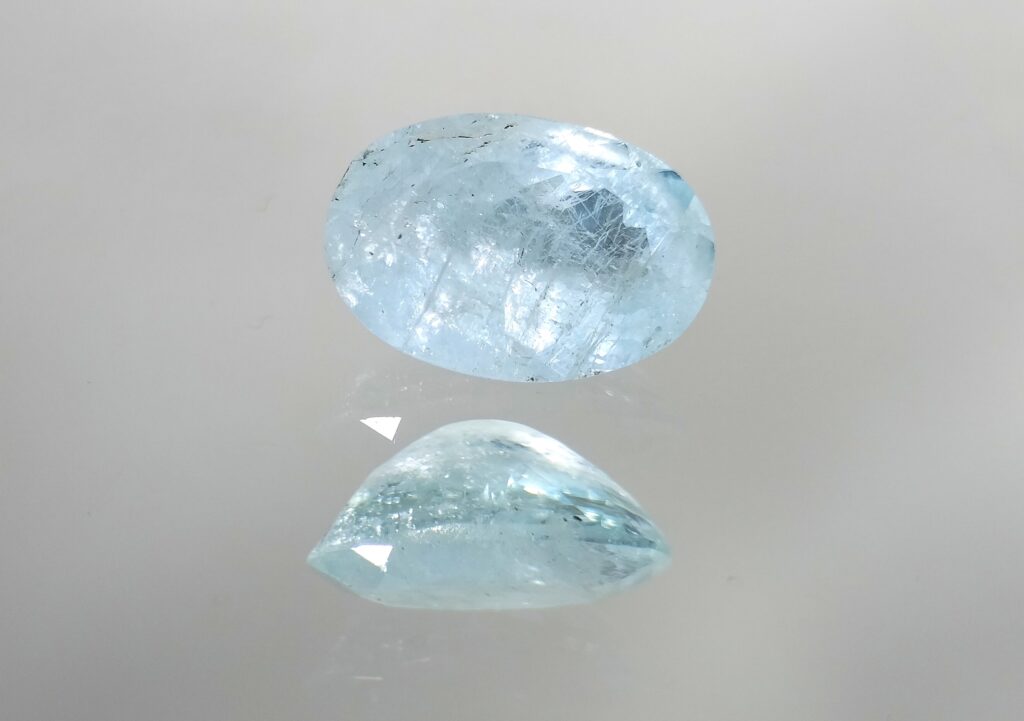
Aquamarine is a type of beryl with a pale-blue to light-green color and transparent to translucent prismatic hexagonal crystals. The color is due to presence of iron. Aquamarine can be found in Afghanistan, Pakistan, China, Kenya, Russia, USA, Brazil, Nigeria, Madagascar, Tanzania, Sri Lanka, India, and Australia. Due to its hardness of 7.5 to 8 on Mohs scale, it is suitable for use in jewelry. Aquamarine is known to promote inner peace, communication, decision-making, love and compassion. It is also associated with prosperity.
Aquamarine cabochons
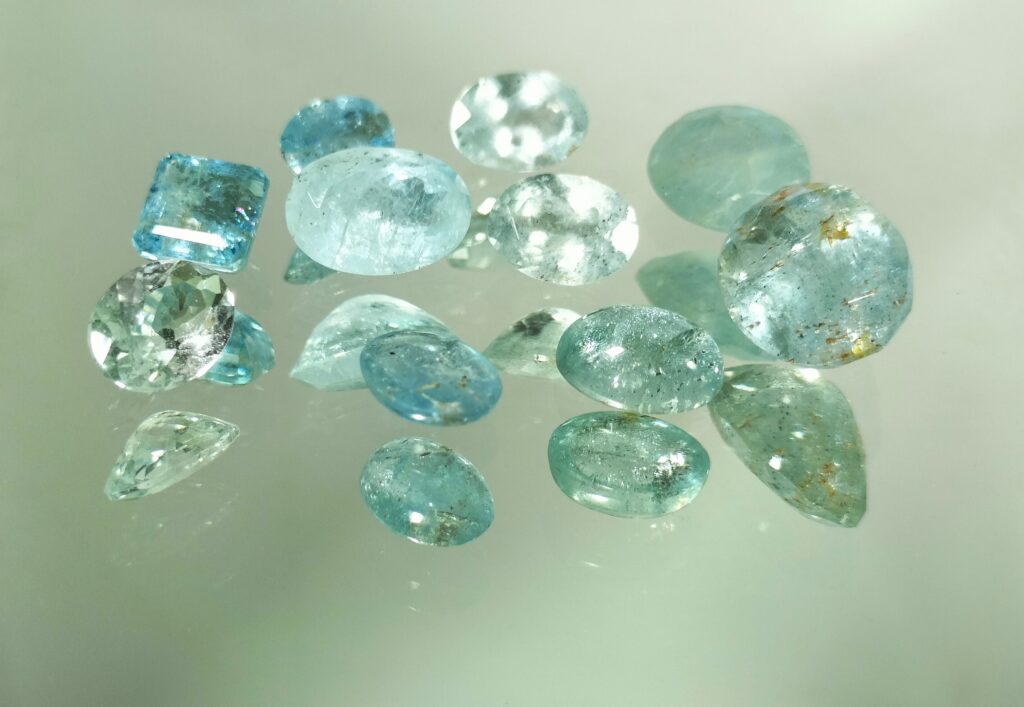
Aquamarine is a type of beryl with a pale-blue to light-green color and transparent to translucent prismatic hexagonal crystals. The color is due to presence of iron. Aquamarine can be found in Afghanistan, Pakistan, China, Kenya, Russia, USA, Brazil, Nigeria, Madagascar, Tanzania, Sri Lanka, India, and Australia. Due to its hardness of 7.5 to 8 on Mohs scale, it is suitable for use in jewelry. Aquamarine is known to promote inner peace, communication, decision-making, love and compassion. It is also associated with prosperity.
Aquamarine facetted cabochons
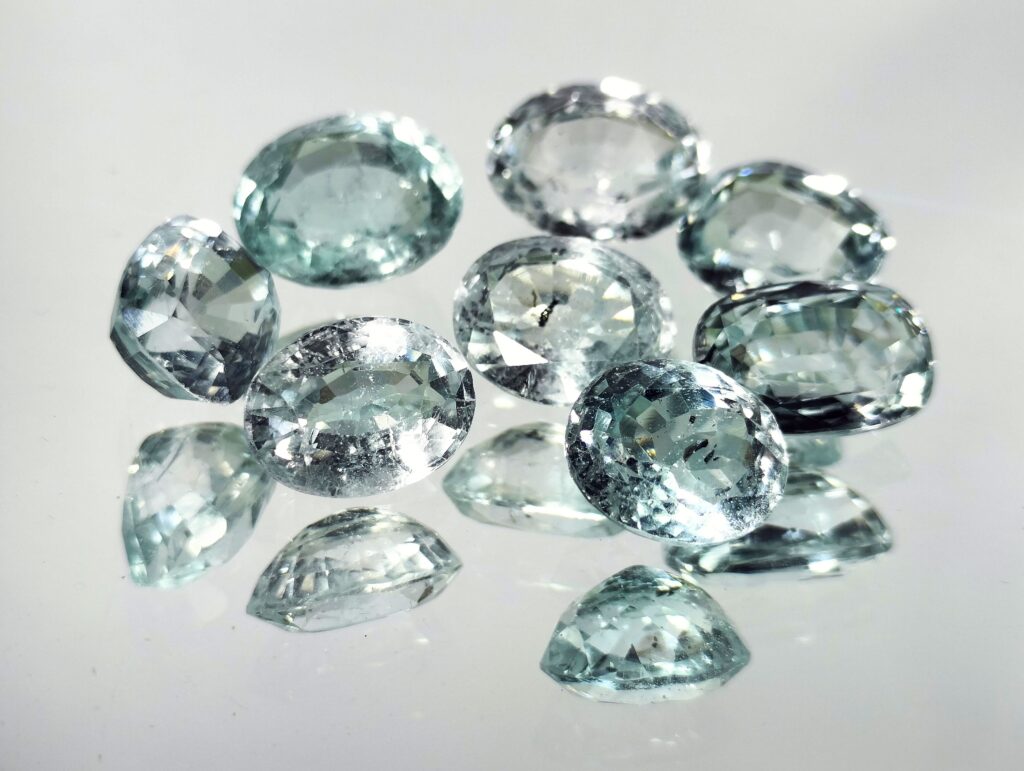
Aquamarine is a type of beryl with a pale-blue to light-green color and transparent to translucent prismatic hexagonal crystals. The color is due to presence of iron. Aquamarine can be found in Afghanistan, Pakistan, China, Kenya, Russia, USA, Brazil, Nigeria, Madagascar, Tanzania, Sri Lanka, India, and Australia. Due to its hardness of 7.5 to 8 on Mohs scale, it is suitable for use in jewelry. Aquamarine is known to promote inner peace, communication, decision-making, love and compassion. It is also associated with prosperity.
Apophyllite cluster on heulandite and druzy matrix
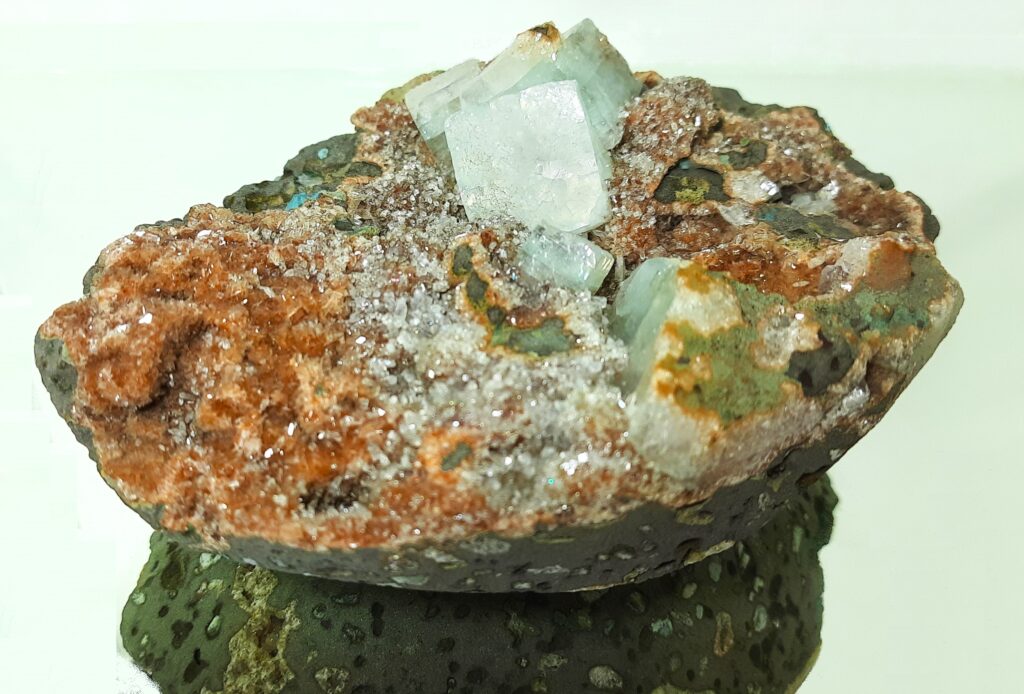
Apophyllite is a group of minerals, primarily a potassium-calcium silicate, known for its clarity and often glassy appearance. It is often found in volcanic rocks and can come in colors like clear, white, green, yellow, or pink. While it is a mineralogical group, the name is frequently used in crystal healing contexts to refer to crystals believed to enhance intuition and spiritual connection, and its name is derived from the Greek word for “flakes off” due to its flaking property when heated. Green apophyllite is believed to offer benefits related to emotional healing, inner peace and grounding.
Apophyllite crystals
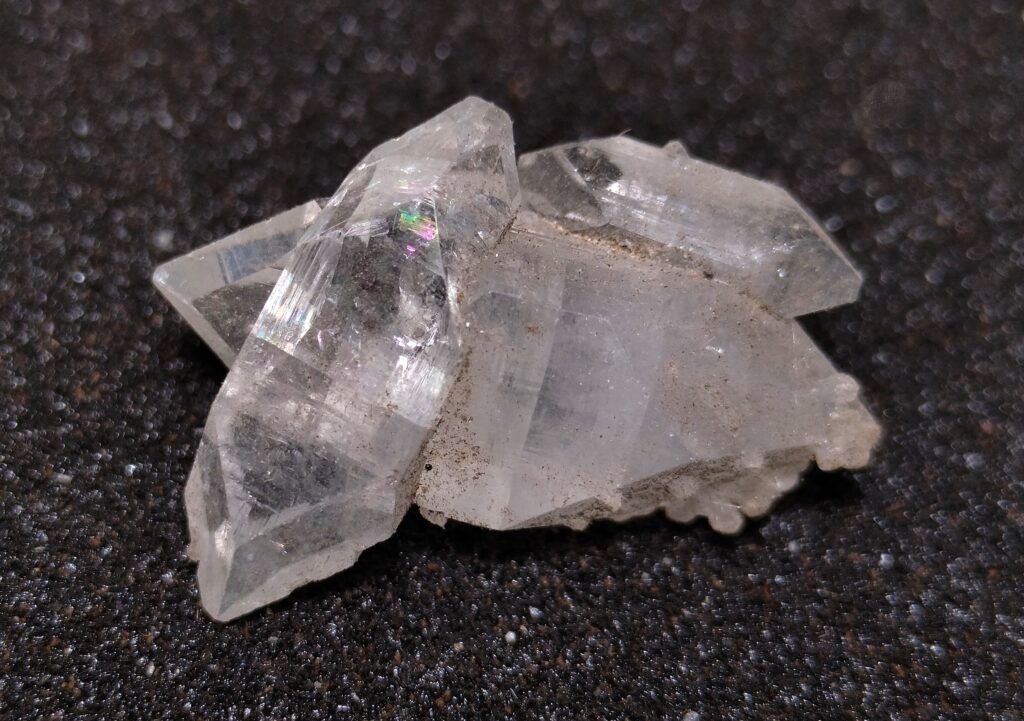
Apophyllite is a group of minerals, primarily a potassium-calcium silicate, known for its clarity and often glassy appearance. It is often found in volcanic rocks and can come in colors like clear, white, green, yellow, or pink. While it is a mineralogical group, the name is frequently used in crystal healing contexts to refer to crystals believed to enhance intuition and spiritual connection, and its name is derived from the Greek word for “flakes off” due to its flaking property when heated. Green apophyllite is believed to offer benefits related to emotional healing, inner peace and grounding.
Apophyllite crystals
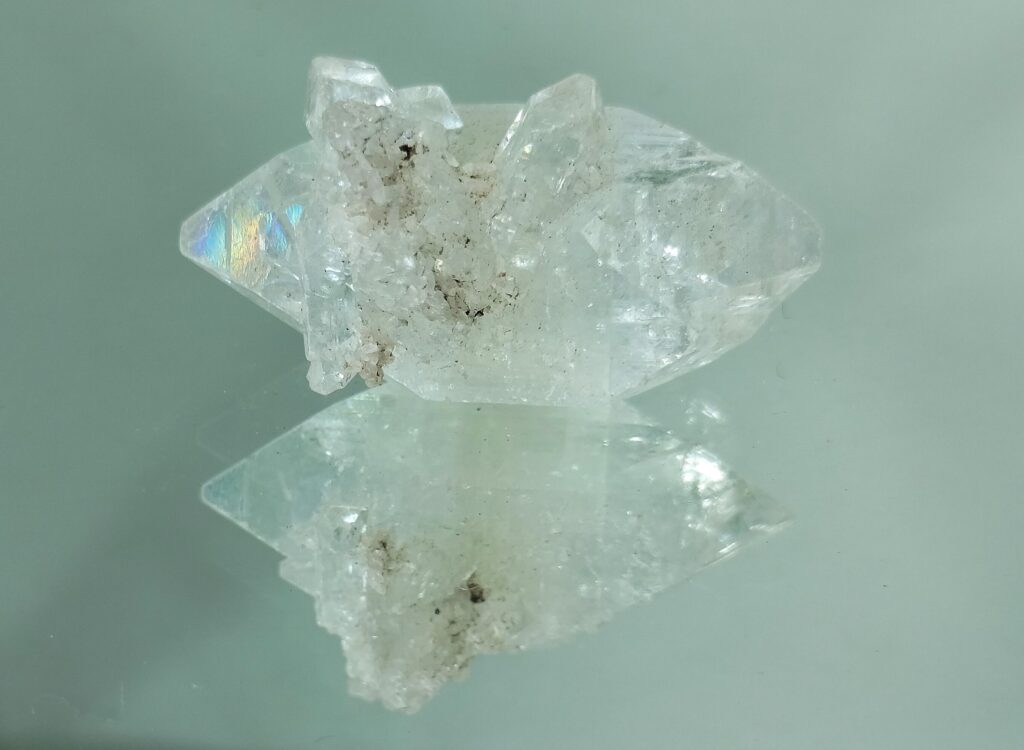
Apophyllite is a group of minerals, primarily a potassium-calcium silicate, known for its clarity and often glassy appearance. It is often found in volcanic rocks and can come in colors like clear, white, green, yellow, or pink. While it is a mineralogical group, the name is frequently used in crystal healing contexts to refer to crystals believed to enhance intuition and spiritual connection, and its name is derived from the Greek word for “flakes off” due to its flaking property when heated. Green apophyllite is believed to offer benefits related to emotional healing, inner peace and grounding.