shripadmaconsultancy.com

Fossils- The frozen eons in stone

These ancient masterpieces are the earth’s quiet memory of a heartbeat, once vibrant and now carved into the enduring silence of stone! Fossils are the preserved remains, imprints, or traces of past life, typically found in rock. They include bones, shells, bodies, footprints and impressions of plants and animals. Fossils not only provide valuable insights into the history of life on Earth, but also add value to jewelry as rare gems. Needless to say, fossils are the classic works of time, where a single fleeting breath from an ancient world is preserved in the eternal ink of minerals and rocks.

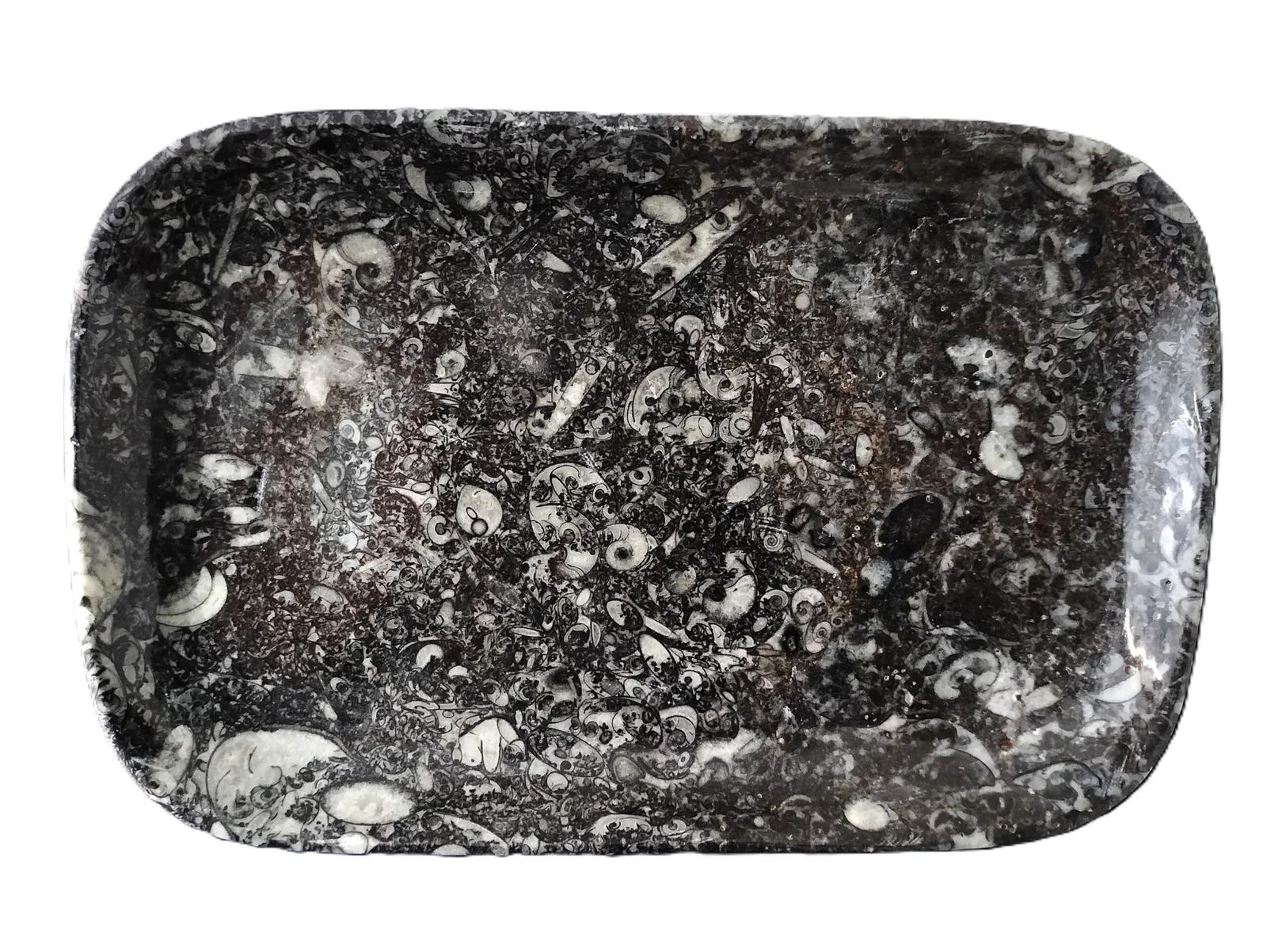
Orthoceras fossil vanity tray/platter

This tray is like a polished fossil floor, with spiraled threads of ancient cephalopods from a forgotten Silurian sea! Orthoceras trays are valued for a unique combination of aesthetic, functional, and perceived metaphysical properties. Its primary use is as a high-end decorative catch-all tray. It can be placed on a console table, dresser, or desk to hold keys, jewelry, coins, perfumes, essential oil diffusers, or other small everyday items. It can also be used to hold lit sage bundle, a stick of palo santo, or incense cones while catching the ash. The intricate natural pattern makes it a striking conversation piece. It is often used as a base for displaying other crystals, minerals, or tumbled stones. The grounding energy of the fossil is believed to amplify or complement the energy of the stones placed upon it. In metaphysical practices, the tray can be used as a central plate on an altar to hold ritual tools, candles, or offerings. It can be used as a serving platter for dry snacks, or chocolates, presented on parchment paper. Orthoceras is considered a powerful grounding tool, helping to connect the user to the Earth’s stabilizing and calming energies. It is also believed to create a protective shield against negative energy. Given that Orthoceras was an early, swimming cephalopod, the fossil is symbolically associated with the flow of communication, adaptability, and overcoming emotional stagnation. Representing a creature from a primeval world that survived and evolved, it symbolizes personal transformation, resilience, and the ability to adapt and evolve to life’s changes.

View Details »

Orthoceras (Kuber stone) pendant

This pendant features a polished mosaic of monochrome and amber beads, strung upon a fossilized spine from a forgotten Silurian sea! The segmented chambers of the ancient cephalopod are inscribed with the golden and obsidian ink of deep time. As fossils formed from the earth, they are considered powerful grounding stones, helping to connect the wearer with the planet’s stabilizing energy. Representing a survivor from a primeval ocean, it is associated with building personal strength, confidence, and the ability to adapt to change. Given that the creature was an early cephalopod (related to the modern squid), it is symbolically linked to the flow of communication, clarity in speech, and overcoming emotional stagnation. It is a perfect, tangible specimen for demonstrating marine invertebrate paleontology, showing the internal structure (siphuncle and septa) of an ancient cephalopod. t is a valued piece for fossil collectors who appreciate the quality of the preservation and the attractive contrast between the light shell segments and the dark matrix. Primarily, it is worn as a unique and striking piece of jewelry. The intricate natural patterns make it a conversation starter, and it complements a variety of styles from bohemian to sophisticated.

View Details »

Ammonite fossil

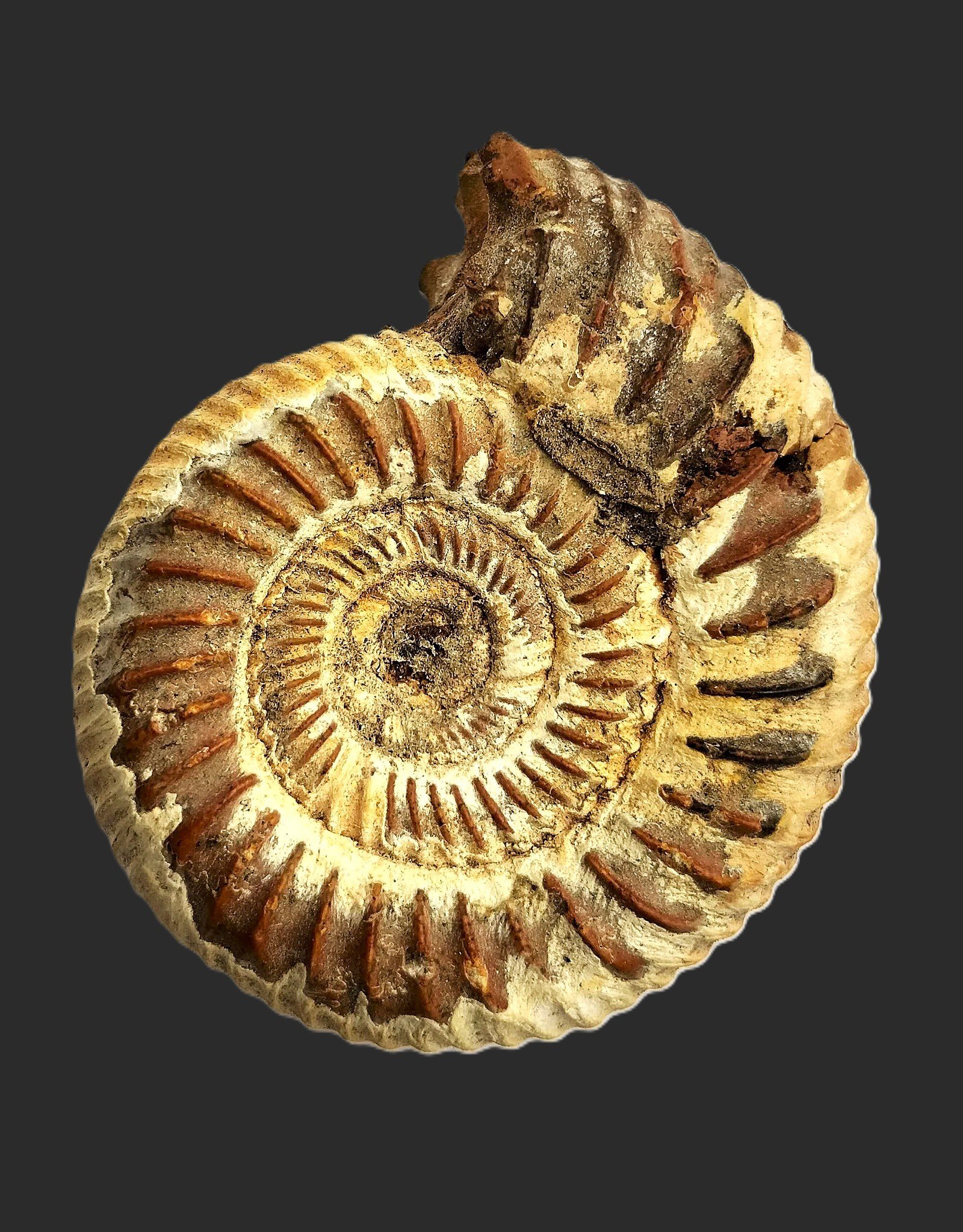
Coiled in sacred geometry, this whorl of timeless stone preserves eons of Earth’s history within a single spiral! his specimen features a classic evolute, planospiral shell structure where each inner coil remains clearly visible within a wide central umbilicus. The surface is marked by thick, pronounced radial ribs that fork near the outer edge, presenting a earthy tan-and-brown contrast against a weathered matrix. It could be a mesozoic ammonite of the genus Perisphinctes or Acanthoceras, defined by strong transverse ribbing and an open, serpentiform coiling pattern. It is found predominantly in fine-grained sedimentary rocks, including limestone, shale, and marl nodules, which protected the original calcium carbonate shell structure over millions of years. It is found in ancient Mesozoic shelf seas across regions such as Madagascar, Morocco, Western Europe, and North America. In geology, ammonites serve as important index fossils, allowing paleontologists to correlate and date the relative ages of sedimentary rock strata worldwide. In metaphysical traditions, the sacred spiral geometry (resembling the Fibonacci sequence) is believed to represent flow, continuous movement, and transformation, providing grounding energy and connecting the bearer to Earth’s primordial past. It is widely cherished as display and collection pieces, educational specimens for paleontology, carved or polished items in decor, and smaller polished specimens for jewelry.

View Details »

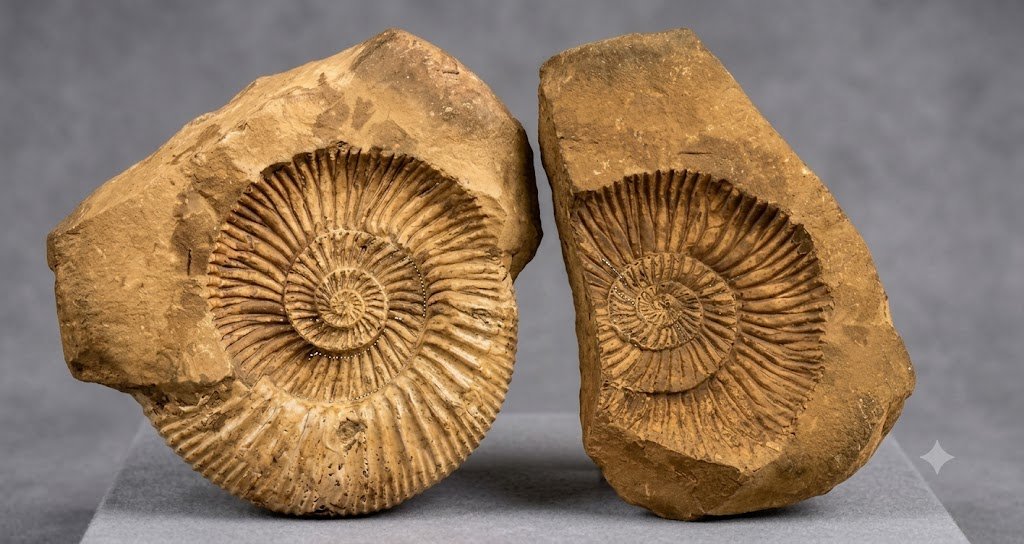
Ammonite matched pair

Where life’s journey ends in stone, time’s twin spirals bloom from a shared heart! This remarkable “matched pair” (often called a “part” and “counterpart”) is generated when an ammonite—an ancient marine mollusk with a spiral shell—becomes fossilized within a rock nodule. Over millions of years, the shell itself might dissolve, but a perfect mold of its complex internal and external structure remains within the surrounding stone. If that nodule is later found and carefully split along a natural plane, it cracks open precisely where the fossil lies, revealing the two perfectly opposing faces: one piece showing the detailed mold (a depression) and the other a complementary cast (a raised shape). These fossils are typically found within sedimentary rocks, specifically inside limestone or shale nodules (concretions). The fine-grained nature of these rocks is crucial for preserving the intricate detail of the ammonite’s shell. They are found worldwide where ancient Mesozoic seas existed. Notable and famous locations include the Jurassic Coast of Dorset, England (known for nodules that split neatly), regions in Madagascar, Morocco, and the Western Interior Seaway of North America (such as the Pierre Shale formation). In geology and paleontology, ammonite matched pairs are highly prized for the exceptional detail they preserve, often allowing for a full 360-degree reconstruction of the creature’s shell. Culturally, they have been symbols of longevity and good fortune for centuries; the Greeks believed they were petrified snake heads, and in medieval Europe, they were known as “snakestones.” In metaphysical beliefs, the ammonite’s constant spiral is associated with eternal cycles, deep time, and continuous transformation. This spiral is often seen as a symbol for the Fibonacci sequence (the Golden Ratio), grounding a person to natural, cosmic order. Placing a matched pair together is believed by some to harmonize forces, acting as a grounding tool that connects a person to the ancient wisdom of the Earth. It is considered a stone of protection, providing stability and removing negative energy. Ammonites are popular as unique collector’s items and exhibition pieces. They are widely used in jewelry (especially smaller ones which are cut and polished) to create earrings, pendants, and rings. Large, aesthetic specimens are used as high-end decorative pieces in interior design. This prehistoric secret, indeed splits open to reveal mirror images of eternal rotation!

View Details »

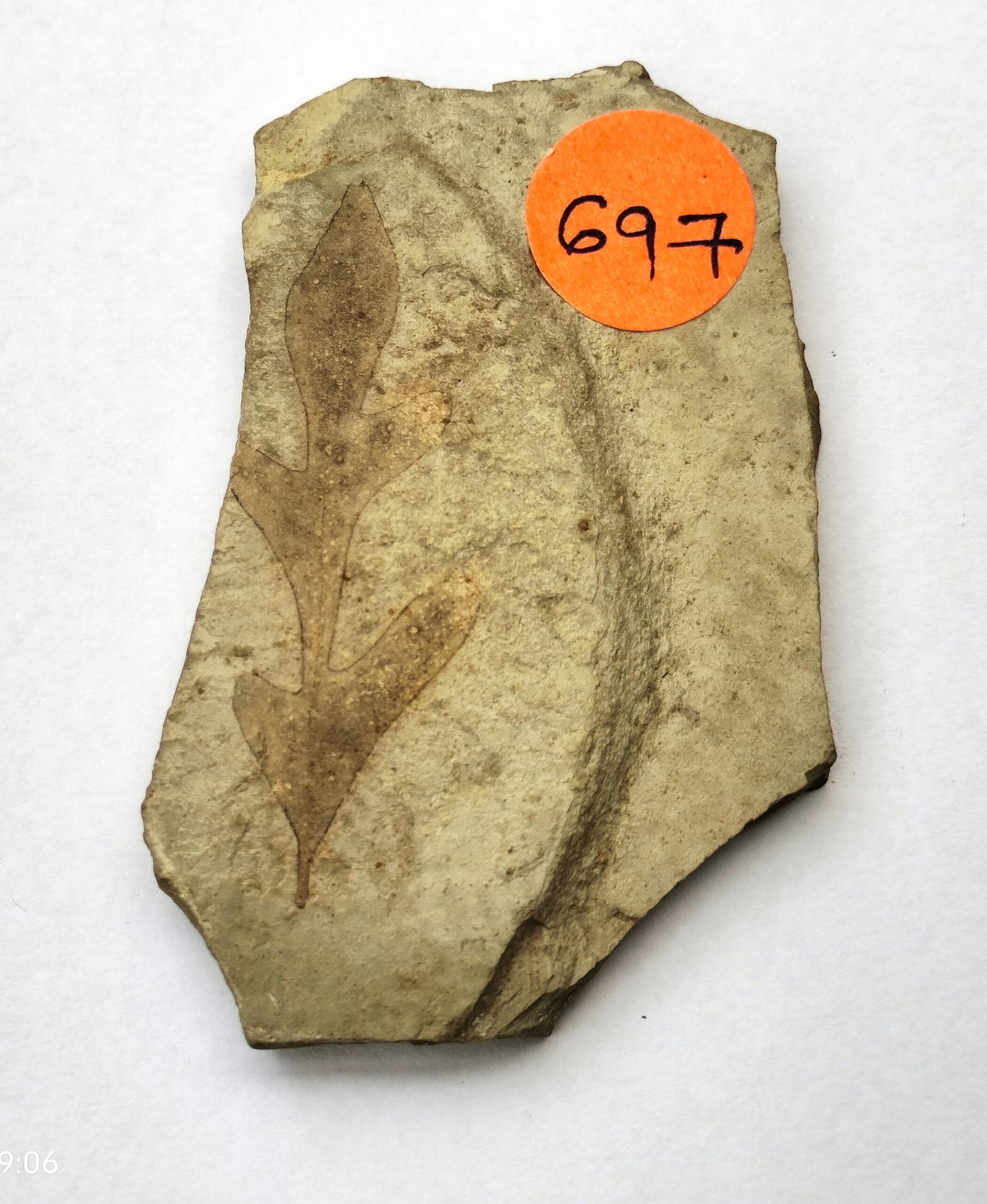
Leaf imprint fossil

This fossil leaf is Earth’s quiet memory, preserving the graceful contour of prehistoric light and life! The leaf impression shows a pinnately lobed structure with prominent, asymmetric primary and secondary venation. The deeply cut sinuses and rounded-to-subacute lobe tips closely resemble the foliage of fossilized Quercus (oak species) or Ginkgoites / Platanus relatives common to Cenozoic flora. The specimen retains a well-preserved carbonaceous film along the central rachis, though fine tertiary venation details along the lobe margins are partially weathered or obscured by the surrounding matrix. The host rock is a fine-grained, lacustrine or floodplain mudstone/siltstone. The light buff-to-grey color of the matrix indicates deposition in a low-energy, oxygen-rich fluvial or lacustrine basin where rapid silt accumulation buried the organic matter prior to decay. The probable Era/Period of this specimen is Paleogene to Neogene Period (approximately 15 to 50 million years old), typical for well-preserved angiosperm leaf compression fossils found in lacustrine shales. It occurs in Green River Formation (USA), the Boltysh basin (Europe), or similar continental lake-bed deposits across North America and Eurasia. Serves as a vital proxy for paleontologists to analyze paleoclimate conditions, ancient atmospheric carbon levels, and prehistoric plant evolution. Makes a unique natural accent piece for home or office decor, bringing organic textures and a connection to deep time into modern spaces. It is highly valued in stone healing traditions as a powerful grounding aid, symbolizing endurance, connection to Earth’s origins, and steady growth through time.

View Details »

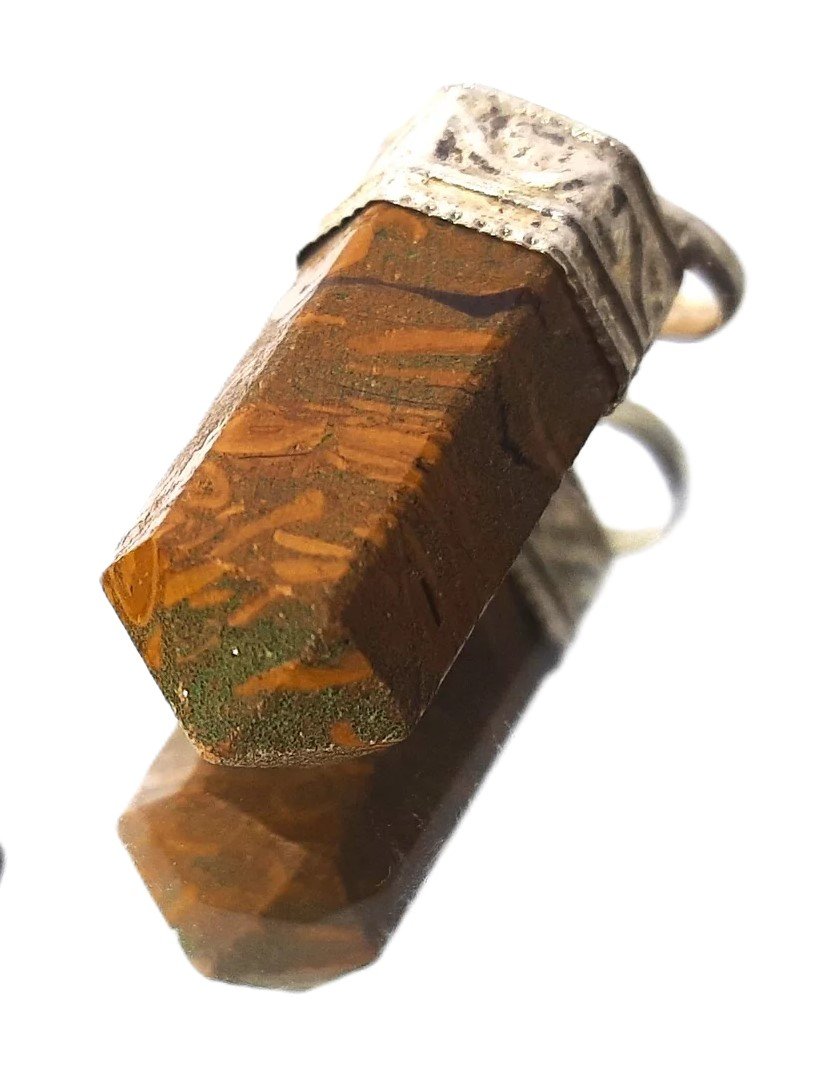
Mariam Jasper tower pendant

Like a sacred script written by the Earth, this golden pillar grounds your dreams in the wisdom of the ages! This stone is unique because it is composed of fossilized shells, bone, and vegetation from ancient Himalayan swamps, giving it a powerful connection to the “script” of the Earth. Mariam Jasper is often called the “Businessman’s Stone.” It is a powerful tool for manifesting long-term prosperity. Wear this pendant during meetings or when planning a new venture to stay “sharp” and strategically grounded. Because this stone contains fossils, it is believed to help the wearer tap into the “Akashic Records” or ancestral wisdom. If you are manifesting a life change, this stone helps you see the “big picture” and ensures your goals are aligned with your soul’s history. When worn as a pendant near the heart or throat, it keeps your vibration steady and cool, preventing “panic-based” thinking that can derail your manifestations. The tower/point shape of the pendant acts as an energy generator. It takes the grounding, earthy energy of the Jasper and points it upward toward your higher chakras. This helps you turn “daydreams” into “actionable plans.”

View Details »

Orthoceras (Kuber stone) cluster pendant

This Orthoceras cluster pendent is an obsidian river flowing with the petrified bones of an ancient sea, where countless cephalopods converge in a silent, elegant tapestry! The specimen displays a high concentration of fossils, 6 full or mostly complete Orthoceras individuals (elongated, segmented, cone-like shells) and numerous partial or distorted individuals, making the total count of individual animals well over a dozen. The pendant combines 400-million-year-old prehistoric marine fossils with modern spiritual jewelry design. Known in many traditions as a “Kuber Stone” (symbolizing wealth and preservation of money), it is associated with “Kuber”, the Hindu God of Wealth and a divine guardian of treasures. It is highly valued by professionals, entrepreneurs, and spiritual practitioners for its energetic and symbolic properties. The fossilized remains symbolize wisdom gained from experience. Wearing it near your heart is said to enhance your decision-making, boost your intuition, and clear mental blockages. As fossils formed from the earth, they are often used to enhance connection with the planet, providing a sense of grounding and physical stability. Fossils are considered to be “libraries of the earth,” and wearing one is thought to aid in accessing knowledge from past eras or one’s own past lives. Considering Orthoceras was an early cephalopod (related to squid and octopuses), it is associated with flow, adaptability, and enhancing clarity in communication. Primarily, it is worn as a unique and striking piece of jewelry that serves as a conversation starter due to its intricate natural patterns. It is a valued piece for fossil collectors, particularly for the quality of the preservation and the arrangement of the shells within the matrix. It serves as a tangible educational tool for demonstrating marine life from the Silurian period (approx. 400 million years ago).

View Details »

Orthoceras cluster stele

These beautiful clusters make up a constellation of starlit spires, etched into the deep stillness of the earth. An Orthoceras cluster is a natural grouping of fossilized, straight-shelled prehistoric marine creatures (cephalopods) that lived over 400 million years ago. In crystal healing and Vastu, these dark-and-white stone clusters are known as “Kuber Stone” and are highly prized for grounding energy and attracting financial abundance. Placing a cluster in the North direction or the “wealth corner” (Southeast) of the office is believed to draw in new career and money opportunities. With its deep connection to Earth’s history, the cluster aligns and heals the Root Chakra, providing a strong sense of inner security and stability. Because it contains fossils millions of years old, the cluster is believed to connect individuals to higher consciousness and ancient knowledge.

View Details »

Orthoceras fossil tower

This cluster free form depicts a gathering of silver voyagers, drifting through a sea of petrified night! Popularly known as the “Stone of Kubera” (the God of Wealth), it is highly valued for attracting business success, steady wealth accumulation, and preventing unnecessary financial losses. Its energy is believed to help calm scattered, anxious thoughts, relieve emotional fatigue, and assist in releasing past traumas that block personal progression. Many use it as a protective talisman to block negative energies, chaotic vibrations, and psychic drains in homes and offices. The fossil’s prehistoric structure is thought to promote sharp thinking, discipline, and clarity during periods of transition or difficult life choices.

View Details »

Microscopic view of fossil shells in Mariam jasper

This stone is a golden tapestry woven from ancient earth, carrying the quiet memory of prehistoric seas! Under microscopic magnification, the image reveals a vibrant landscape of rich mustard-yellow microcrystalline textures juxtaposed against earthy brown hues, highlighted by striking white and blue-teal mineral veining at its center. The granular surface details show intricate crystallization and natural fracturing, capturing an intimate look at the stone’s organic assembly. Also known as Script Stone or Elephant Skin Jasper, Mariam Jasper is a unique fossiliferous rock formed from ancient shell fragments, marine life, and hematite embedded in a silicified matrix over millions of years. Naturally found in the Himalayan region and India, it is prized both for its bold, script-like patterns and its historic reputation as a grounding stone deeply connected to earth energy. On this Nature’s gilded canvas, deep earth tones and cool mineral hues dance in timeless harmony!

View Details »

Ammonite (whole)

This exquisite ammonite fossil is a stone-spun spiral of ancient tides that holds the infinite rhythm of a prehistoric sea! The spiral shape and the iridescent, dendritic patterns make it a true masterpiece of nature’s history. The shape of the ammonite follows the Fibonacci sequence—a “Golden Spiral” found everywhere in nature. Because of this, it is believed to Help move stagnant or “stuck” energy through the body and environment. It is a stone of change, helping the wearer navigate transitions in life with grace and steady progress. Being fossils, ammonites have a deep connection to the Earth and the Root Chakra. They are believed to attract success, abundance, and positive “Qi” (energy) into a home or office. They are thought to hold the wisdom of the ages, helping the owner make sound decisions regarding their future. Ammonites are often associated with longevity and cellular regeneration. In traditional crystal lore, their spiral shape is sometimes linked to the expansion of the lungs and healthy breathing.

View Details »

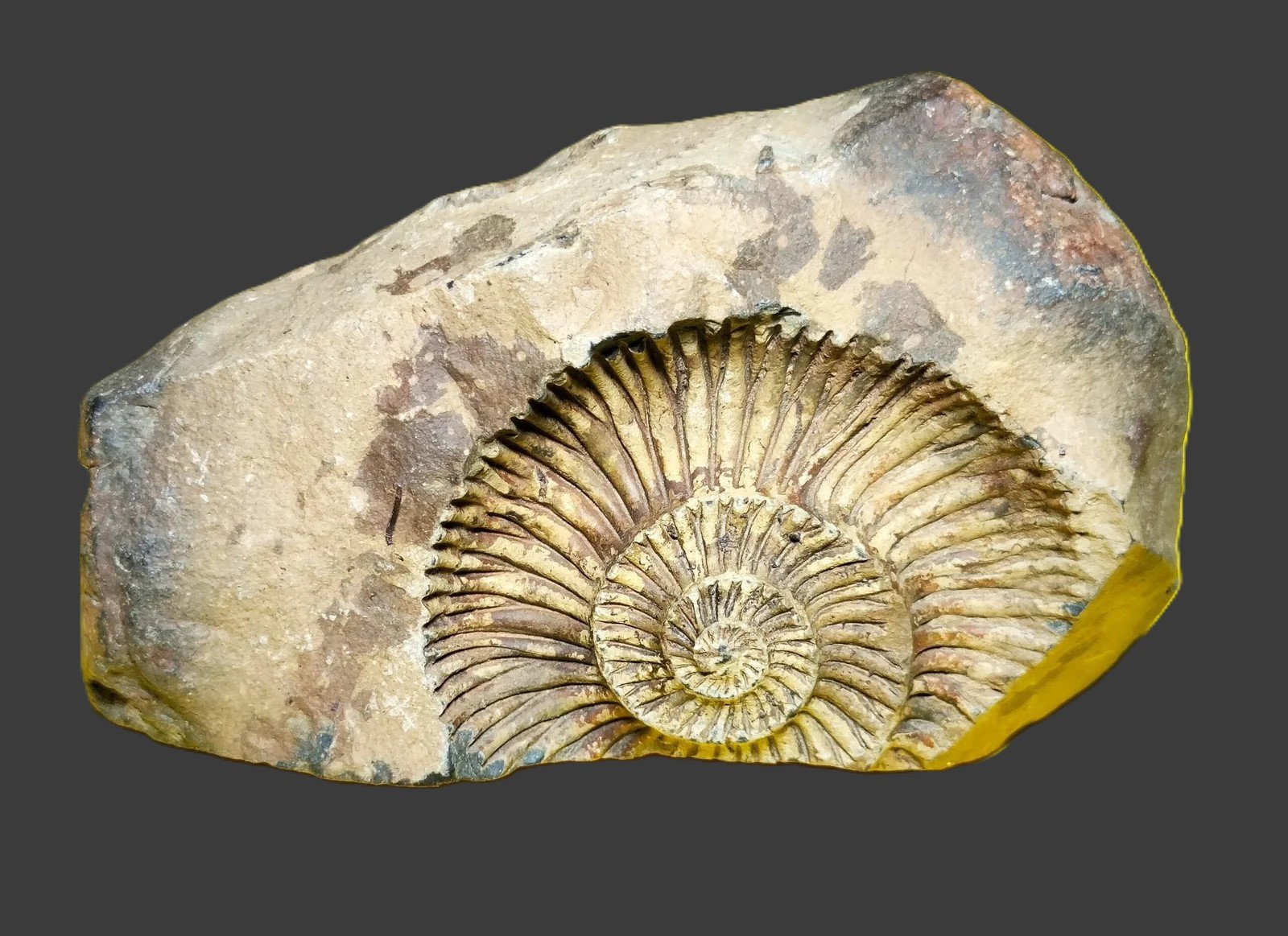
Ammonite

This specimen is nature’s eternal compass, a perfect spiral carved in the memory of stone! It is an exceptional example of a natural fossil “mold” or negative impression. It features a rough, light-tan sedimentary rock nodule that has been split open to reveal a cavity. Imprinted flawlessly into this void is the intricate shape of an ammonite shell. The impression shows incredibly sharp detail, featuring dozens of fine, outward-curving ribs and the tight, complex central coil of the creature’s growth. The surrounding stone is an unpolished, granular matrix that provides a perfect, natural frame. Ammonites were prolific marine cephalopods, related to octopuses, that went extinct at the end of the Cretaceous period. This specimen demonstrates strong affinities with the genus Grammoceras (specifically Grammoceras striatulum) or possibly a species within the family Graphoceratidae. The crucial features are the planispiral form, the specific spacing and curving pattern of the bifurcating (splitting) ribs, and the way the ribs appear to form a sharp, distinct keel on the outermost whorl. his fossil dates to the Early Jurassic Period, specifically the Toarcian Stage (approximately 180 to 183 million years ago). Ammonites from this period are incredibly important biostratigraphic marker fossils. Fossils showing this style of fine preservation in a pale limestone or siltstone matrix are common in famous European formations, such as the Lias Formation of the United Kingdom (e.g., Yorkshire) and equivalent deposits in Normandy, France. They are the primary tools in paleontology for relative dating of rock layers, helping scientists match different geological sites. Their shells are widely cited as real-world examples of a golden spiral (though they are logarithmic), inspiring mathematical and organic studies. Their striking spiral form and intricate patterns make them desirable natural art objects for interior design and collections. In some belief systems, they are considered stones of protection and are said to promote positive, grounded energy.

View Details »

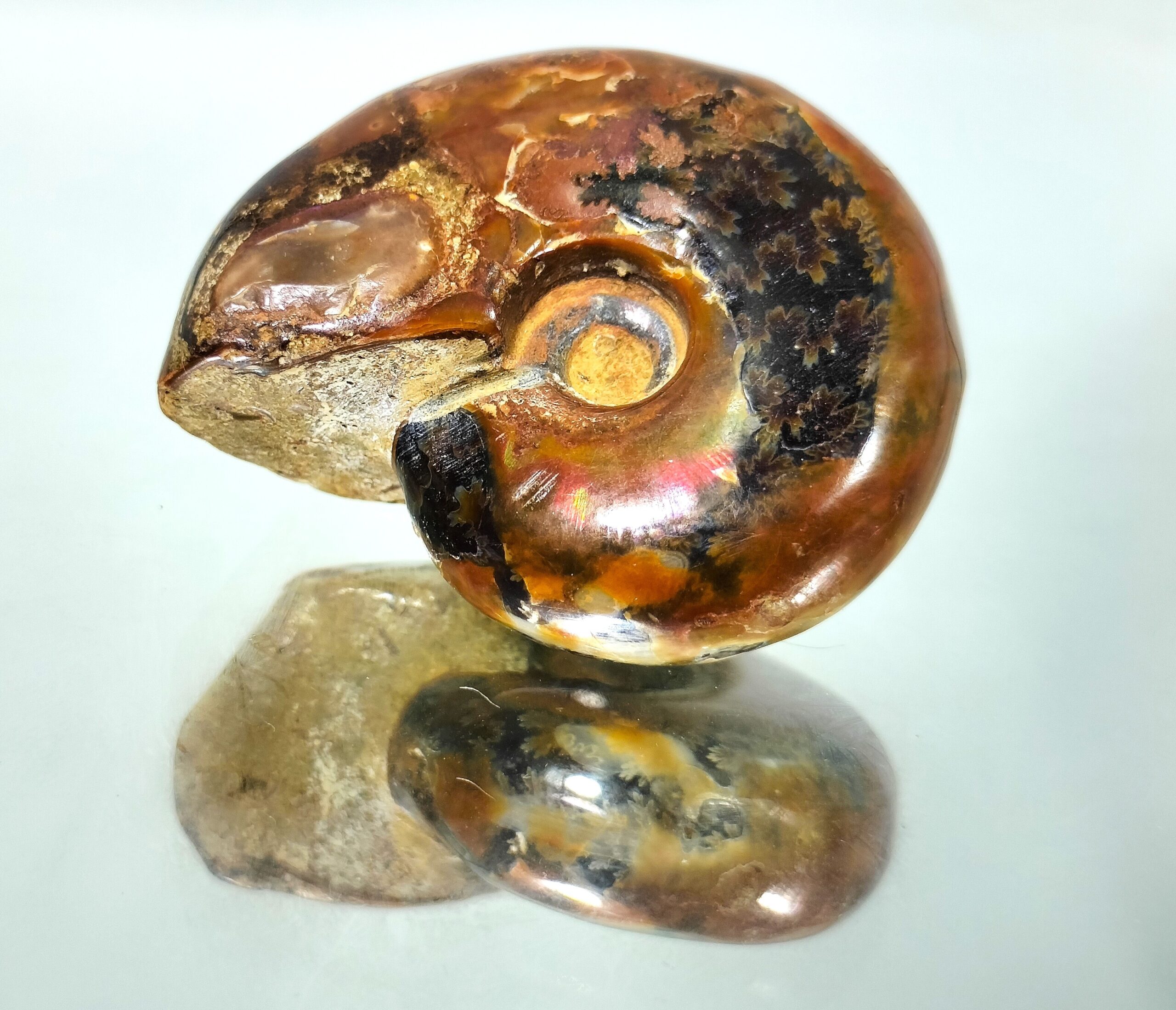
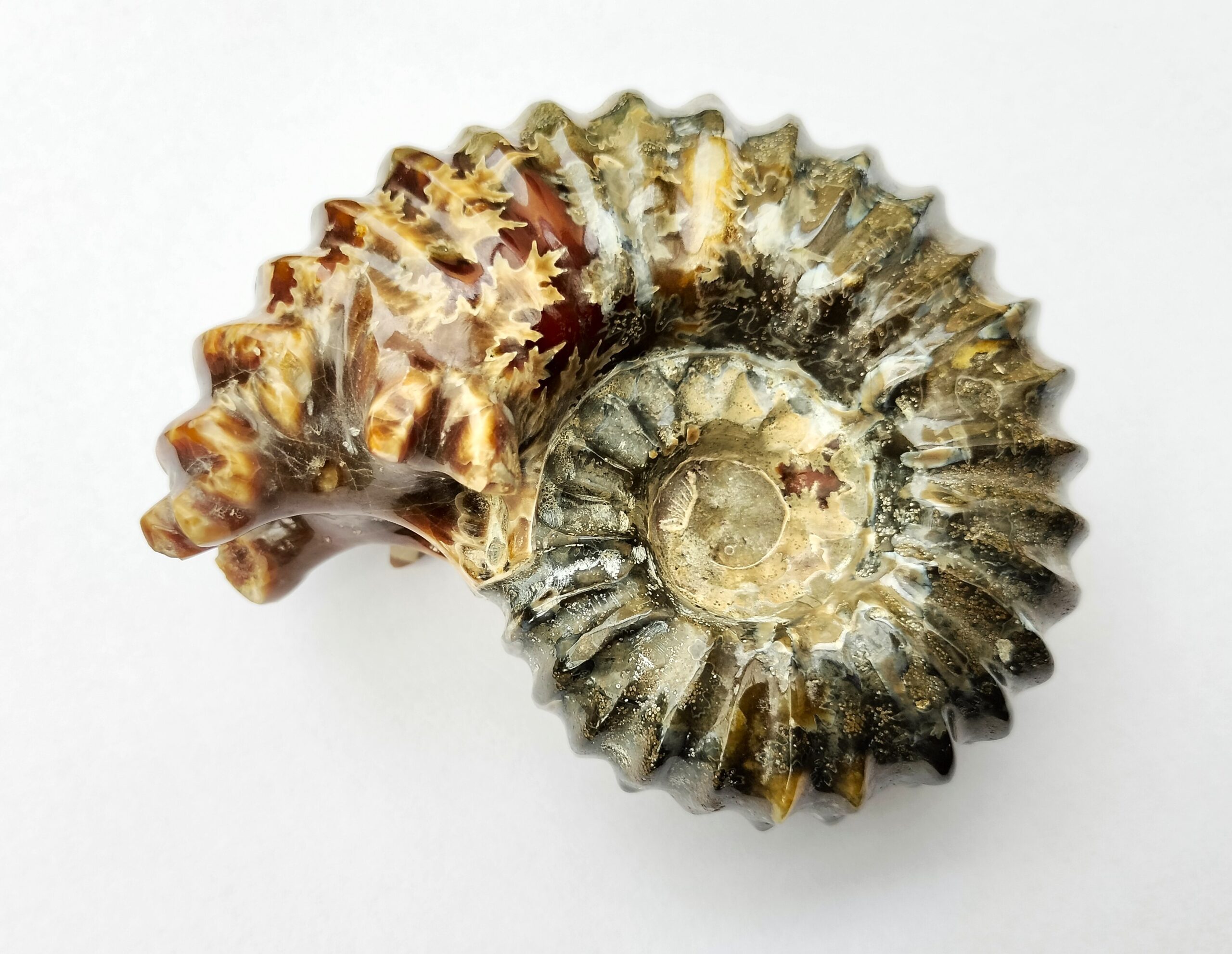
Ammonite (agatized)

This ammonite fossil features intricate golden sutures tracing the silent rhythm of eons, and coiled forever in luminous harmony! It has a high-gloss finish highlighting rich amber-brown, dark bronze, and golden tones. It exhibits prominent, sharp radial ridges along the outer whorl and beautifully exposed ammonitic suture lines—delicate, fern-like pattern traces where internal chamber walls met the outer shell. It likely belongs to the order Ammonitida recognized by its robust, nodular or ribbed architecture and complex, highly frilled sutures visible across the polished surface. Originates from fine-grained sedimentary rocks such as limestone, calcareous shale, or marl, where mineral-rich groundwater slowly replaced the organic structure with agate, calcite, or aragonite. It occurs in Cretaceous fossil beds found in Madagascar (famous for polished, agate-filled specimens), as well as deposits in Morocco, Russia, and parts of Western Europe. Metaphysically, the combination of spiral geometry and crystallization is believed to awaken inner strength, draw out negative energy, and foster continuous growth through life’s cycles. It is valuable as high-end decorative collector items, meditation stones, museum display pieces, and cut-or-carved focal stones in bespoke fine jewelry. Ammonites from the Gandaki River in Nepal are known as Shaligrams- manifestation of the Hindu god Vishnu. The spiral shape symbolizes continual change and evolution. Ammonites are used for activating Kundalini. It is believed that ammonites bring good health, prosperity and success.

View Details »

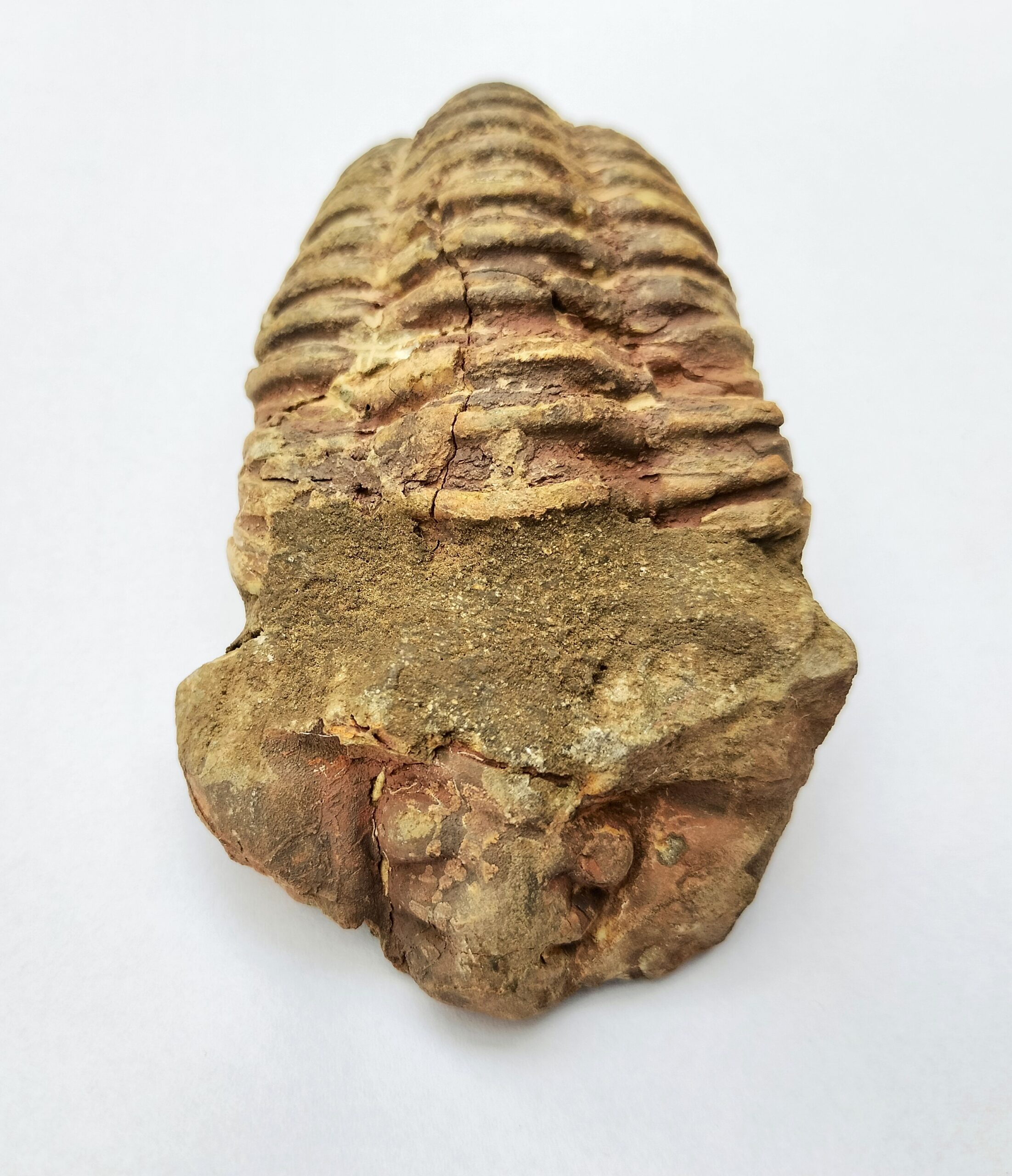
Trilobite fossil specimen

This is a segmented creature of the primordial tide, now sleeping in the eternal silence of rust and stone! The remarkable specimen is fossil Trilobite, one of the most successful and iconic creatures to ever inhabit the Earth’s ancient oceans. This specimen is an extinct marine arthropod belonging to the class Trilobita, which flourished during the Paleozoic Era (roughly 521 to 252 million years ago). The name “trilobite” is derived from its characteristic three-lobed body structure: a central axial lobe flanked by two pleural lobes. This fossil clearly exhibits a well-defined, segmented thorax and the remnants of the cephalon (head section). The earthy, reddish-brown coloration suggests that the original organic matter was replaced by iron-rich minerals like siderite or limonite during the millions of years it lay buried in sedimentary rock. While trilobites are no longer living, their fossils provide immense value to both the scientific and spiritual worlds. Because they evolved rapidly and were widespread, trilobites are “index fossils,” helping geologists determine the relative age of the rock layers in which they are found. They provide evolutionary record of some of the earliest complex eyes and respiratory systems in the animal kingdom. Scientists in the field of Paleogeography use the distribution of trilobite species to map the movement of ancient continents (plate tectonics). In the world of crystal and fossil healing, trilobites are regarded as symbols of resilience and time. They are believed to carry the energy of survival, helping the wearer or owner persevere through long, difficult transitions. As “stones of the earth,” they are used for deep grounding, helping to connect one’s personal history with the vast history of the planet. Historically, some cultures viewed trilobites as symbols of leadership and protection due to their “shield-like” appearance. Due to their intricate geometric patterns, trilobites are highly prized by collectors as “natural sculptures” that bring a sense of deep time and history into a home or office space.

View Details »

Mariam Jasper Angel

This celestial guardian of deep time, has wings inscribed with the ancient, swirling scripture of a long-forgotten sea! This angel figurine carved out of the Himalayan stone Mariam jasper has distinct calligraphic pattern etched with fossilized animals of the distant past. It is associated with grounding energy, promoting stability, and enhancing communication skills. Angel is the messenger of God who guides to show the right path. Angel figurine offers protection, attracts positive energies and promotes a harmonious environment. The wings of an angel symbolize freedom, grace, and lightness. This angel figurine can be kept in the home or office at a suitable place.

View Details »

Mariam jasper tower

This slender pillar of desert-hued earth, carries the tangled, beautiful script of a prehistoric tide toward the sky! The beautiful crystal tower of Mariam jasper features calligraphic design created by nature’s forces and entraps ancient energy.
A Mariam Jasper crystal tower (often called a Calligraphy Stone or Miriam Stone) combines the grounding properties of jasper with a tower shape that focuses and amplifies energy. It is primarily used to reduce stress, stabilize emotions, shield against negative vibrations, and boost personal courage and manifestation efforts. Known as a “recharging stone,” it soothes anxiety and helps clear the aura of negative or environmental vibrations. The point of a crystal tower draws and directs energy upward, radiating positive vibrations into one’s own space.

View Details »

Mariam jasper pendant

This pendant is an earthy medallion of desert-hued light, etched with the tangled and beautiful calligraphy of a world long forgotten! The unique organic statement piece is artisan-carved. The calligraphic script is natural and is created by deposition of ancient fossils and shells in a metamorphic rocks. Mariam jasper is associated with grounding energy, promoting stability, and enhancing communication skills. Wearing the pendant would transfer grounding energy to the wearer to promote emotional stability.

View Details »

Mariam jasper cabochons

These polished domes of desert gold, are where the earth’s ancient hand has brushed a tangled script of shadow and time! These artisanal cabochons of Mariam Jasper flaunt calligraphic script written by mother nature. They were formed by deposition of ancient fossils and shells in metamorphic rocks of the Himalayan range. Mariam jasper is associated with grounding energy, promoting stability, and enhancing communication skills. Wearing the pendant would transfer grounding energy to the wearer to promote emotional stability.

View Details »

Mariam Jasper Raw stone

This rugged tablet of the ancient mountain, is etched with the skeletal calligraphy of a sea that time has turned to stone! The raw Mariam jasper stone from Himalayan range in India is nature’s gift of art! The characteristic calligraphic script was written millions of years ago as the mountains moved by tectonic shifts trapping minerals, mud, plants, and fossilized shells in sedimentary limestone. Due to it’s uniqueness and aesthetic appeal, Mariam jasper is popular for use in jewelry and decorative applications. It is associated with grounding energy, promoting stability, and enhancing communication skills.

View Details »

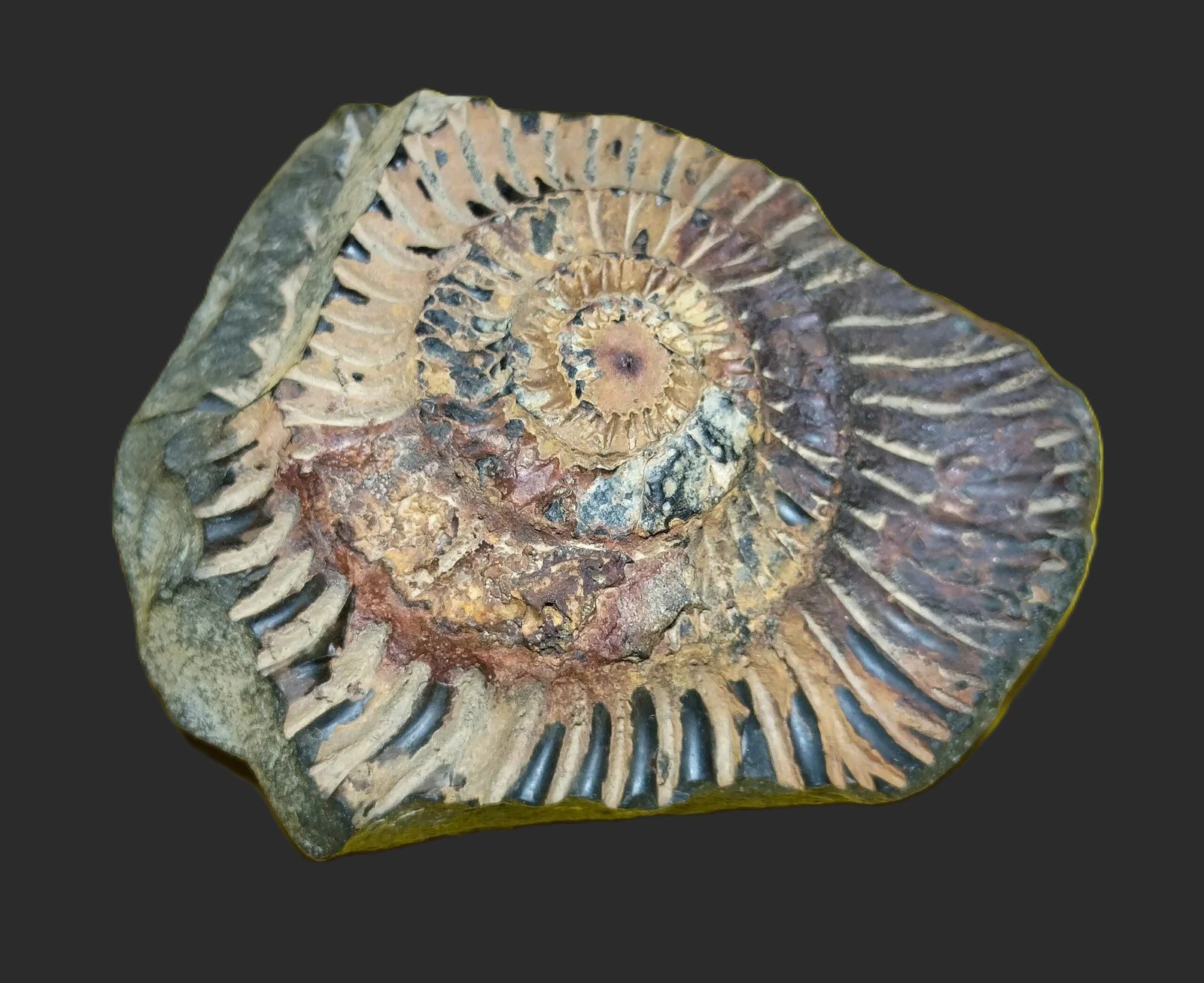
Ammonite

This Ammonite specimen is a spiral path to prehistoric waters, now a silent compass through deep time! This is a partially embedded ammonite, showcasing its classic spiral coil. Its strong, sharp, radial ribs create a deep, textured surface that spirals inwards. The central core shows a deep purplish-brown color, moving to lighter tans on the outer ribs. The dark matrix, visible around the edges, confirms its origin within an ironstone nodule. The central structure and overall geometry are incredibly precise. This specimen is a critical example of Dactylioceras commune, a highly significant biostratigraphic marker fossil for the Early Jurassic, specifically the Toarcian age (~180 million years ago). Characterized by its planispiral form and unbranched, sharp ribbing, it is most commonly associated with the Alum Shale and Whitby Mudstone Formations in Yorkshire, UK. This fossil type is crucial for correlating rock strata across Europe and provides immense value for studying ancient marine ecosystems and evolutionary rates within the Ammonitida order. It has scientific value for dating rock layers and evolutionary studies. It is a valuable collector’s item due to its beauty and completeness. Cut and polished ammonites are used in jewelry. It is believed to hold ancient earth energy.

View Details »