
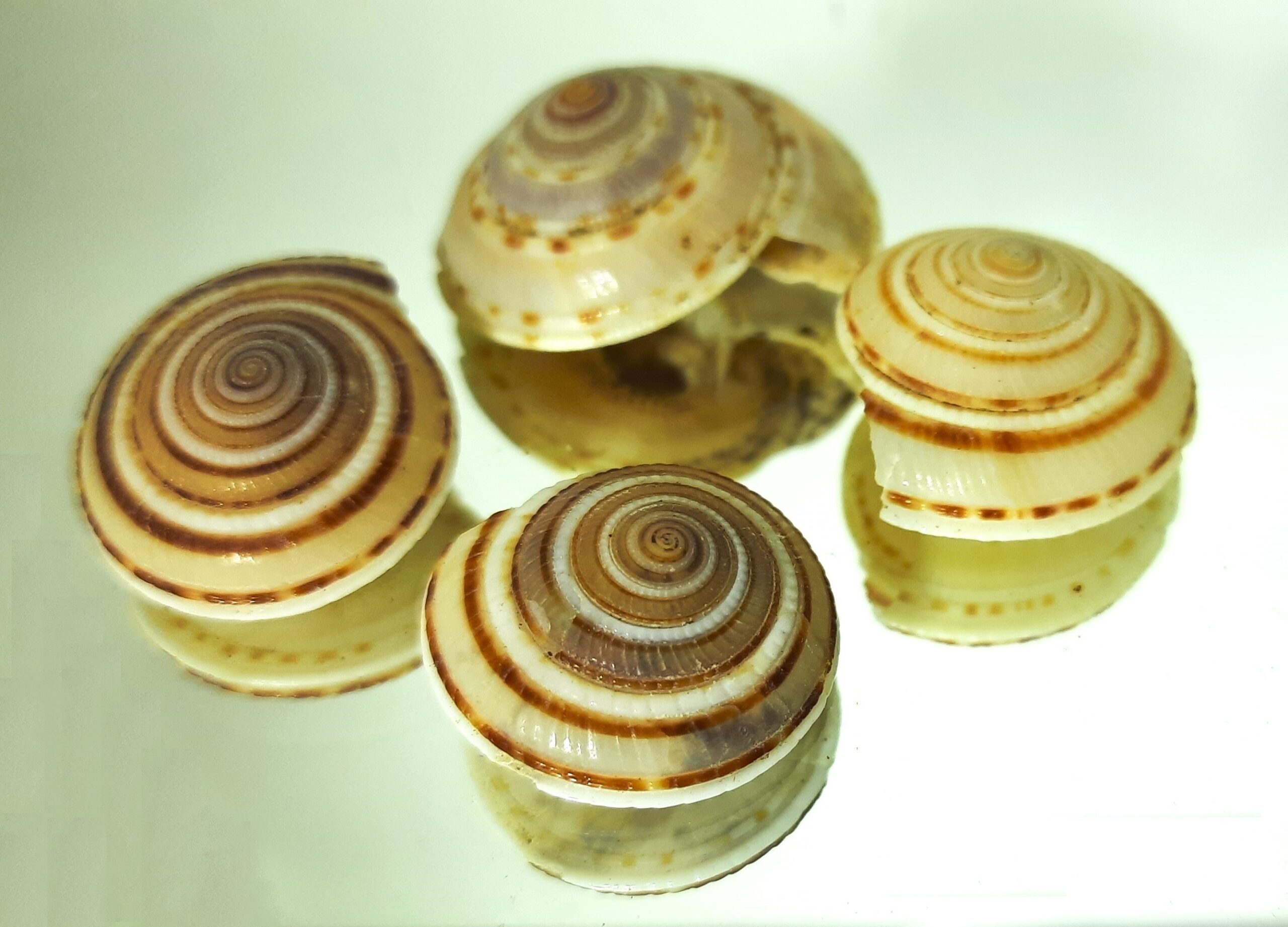
Vishnu Chakra shells (Shankh)
This eternal wheel of protection carved by divinity, holds the endless rhythm of the cosmos in a pearl! Vishnu Chakra (also called Sudarshana Chakra or Naag Chakra) shell is a naturally formed exoskeleton of a marine snail. It is also known as the Dakshinavarti Shankha (Conch Shell opening to the right). It is formed by the snail from calcium carbonate and resembles the divine spinning discus (Sudarshana Chakra) of Lord Vishnu. This eternal wheel of protection carved by divinity, holds the endless rhythm of the cosmos in a pearl! Vishnu Chakra (also called Sudarshana Chakra or Naag Chakra) shell is a naturally formed exoskeleton of a marine snail. It is also known as the Dakshinavarti Shankha (Conch Shell opening to the right). It is formed by the snail from calcium carbonate and resembles the divine spinning discus (Sudarshana Chakra) of Lord Vishnu. In Hindu tradition, it doesn’t just represent Lord Vishnu; it is believed to be a direct physical conduit for his Sankalpa Sakthi (divine will) and the cosmic sound of creation (Om). The shell is naturally compact, typically measuring between 1 to 3 centimeters in diameter. It is characterized by an elevated shell structure on one side and a flat, spiral whirl pattern on the other. It symbolizes the powerful weapon of Lord Vishnu and is believed to ward off negative energies and evil influences. These natural shells are sourced from coastal regions in India, such as Ramanathapuram, Tamil Nadu, and various parts of the Indian Ocean basin. In Vedic astrology, it is occasionally kept or worshipped to counter specific horoscope afflictions like Naag dosh or Sarpa Dosha. It is used in rituals to invite wealth, good health, and protection. It is regarded as a form of Goddess Lakshmi (the consort of Lord Vishnu) and is kept in cash boxes, home altars, or safes to bless the home with wealth, good fortune, and financial stability. Its presence is said to purify the atmosphere, dissolve Vastu Dosha (architectural faults), and bring peace, harmony, and tranquility to the household. It aids in meditation, increases focus, and helps in attaining spiritual awakening by clearing the mind and activating positive chakras within the body. The shell is naturally compact, typically measuring between 1 to 3 centimeters in diameter. It is characterized by an elevated shell structure on one side and a flat, spiral whirl pattern on the other. It symbolizes the powerful weapon of Lord Vishnu and is believed to ward off negative energies and evil influences. These natural shells are sourced from coastal regions in India, such as Ramanathapuram, Tamil Nadu, and various parts of the Indian Ocean basin. In Vedic astrology, it is occasionally kept or worshipped to counter specific horoscope afflictions like Naag dosh or Sarpa Dosha. It is used in rituals to invite wealth, good health, and protection. It is regarded as a form of Goddess Lakshmi (the consort of Lord Vishnu) and is kept in cash boxes, home altars, or safes to bless the home with wealth, good fortune, and financial stability. ts presence is said to purify the atmosphere, dissolve Vastu Dosha (architectural faults), and bring peace, harmony, and tranquility to the household. It aids in meditation, increases focus, and helps in attaining spiritual awakening by clearing the mind and activating positive chakras within the body. Vishnu Chakra shell is used for Abhishekam (Ritual Bathing); wherein, the shell is used to pour holy water (Gangajal) or milk over idols of deities (especially Shaligram Shila or Lord Vishnu) during daily worship rituals. It is also used for Water Offering (Teertham); wherein, water is stored inside the shell overnight (or for a few hours) and then consumed by devotees in the morning as Teertham (holy water), believed to bestow health and blessings.