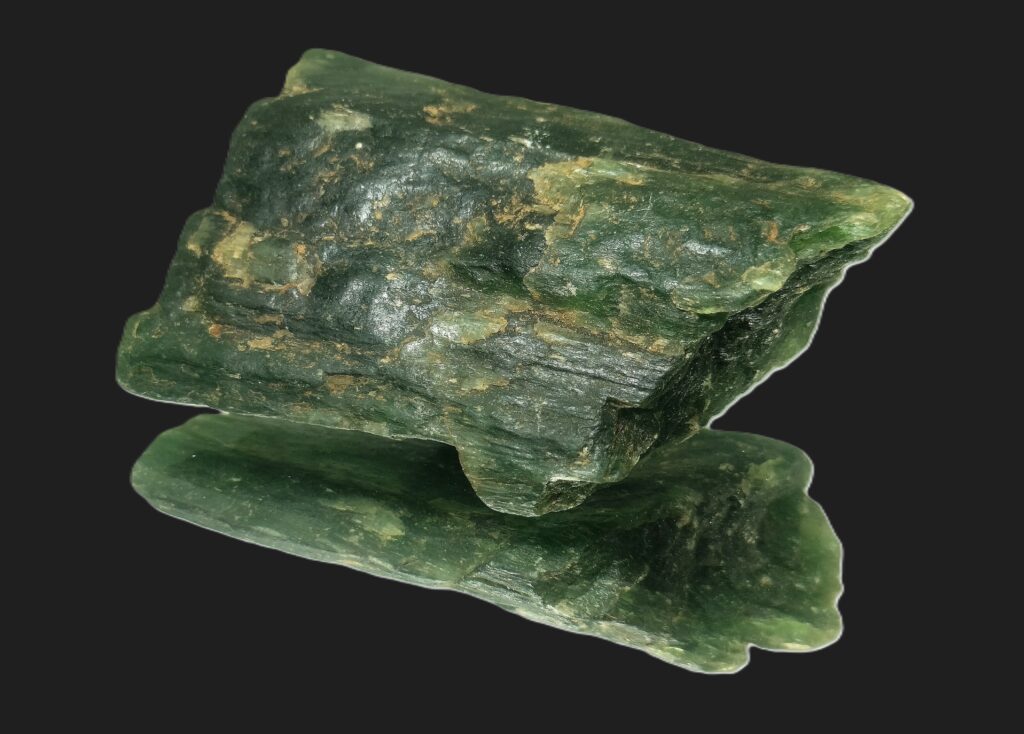
This quiet sanctuary of stone, is painted in the rich, soothing shades of a dense canopy! The prominent platy, layered, and slightly lamellar structure (corrugated sheets) visible along the fracture planes is classic for antigorite- a type of serpentine. While Chrysotile forms distinct, flexible, long, silky fibers (like asbestos), Antigorite's fibers are more tightly bound, giving it that splintery, "woody" texture seen in this photo. With a deep forest green to olive green color, it displays the characteristic waxy to vitreous sheen with translucent green edges on the layered breaks. With Mohs hardness of 2.5 to 4, it is highly prized by jewelers and stone carvers, especially when polished into cabochons, decorative beads, or small sculptures due to its rich color and waxy sheen. Historically quarried as a decorative stone (often referred to as "serpentine marble") for countertops, tile, inlay work, and structural facades. A powerful and versatile stone, it is often called the "Stone of Infinity," renowned for its ability to stimulate the Kundalini energy. Serpentine is a strong grounding stone that connects you deeply to the Earth's natural energy. It is also said to create an energetic shield against negative vibrations and psychic attacks. Widely regarded in crystal traditions as a calming stone that helps clear emotional blockages and restore inner equilibrium during stressful transitions. Often linked to the Heart and Solar Plexus chakras, used in meditative practices to promote a steady, revitalizing energy flow throughout the body.
On closer examination, the strong translucency at the thin edges, and small dark specks (chromite or magnetite inclusions) point to a very sought-after gemological variety known as "Williamsite."